
5 Best Soundbars 2026: Which One Is Actually Worth Buying?
If your TV sounds thin, dialogue gets buried, or movies simply lack impact, a soundbar can make a surprisingly big difference. But the five models in this comparison take very different approaches—from an inexpensive detachable stereo bar to premium Dolby Atmos systems designed for serious home theater setups.
For this comparison, we looked at connectivity, channel configuration, Dolby Atmos support, room suitability, smart features, expandability, value, and the compromises buyers should understand before spending their money.
MZEIBO Sound Bar for Smart TV — 80W Detachable Bluetooth Soundbar
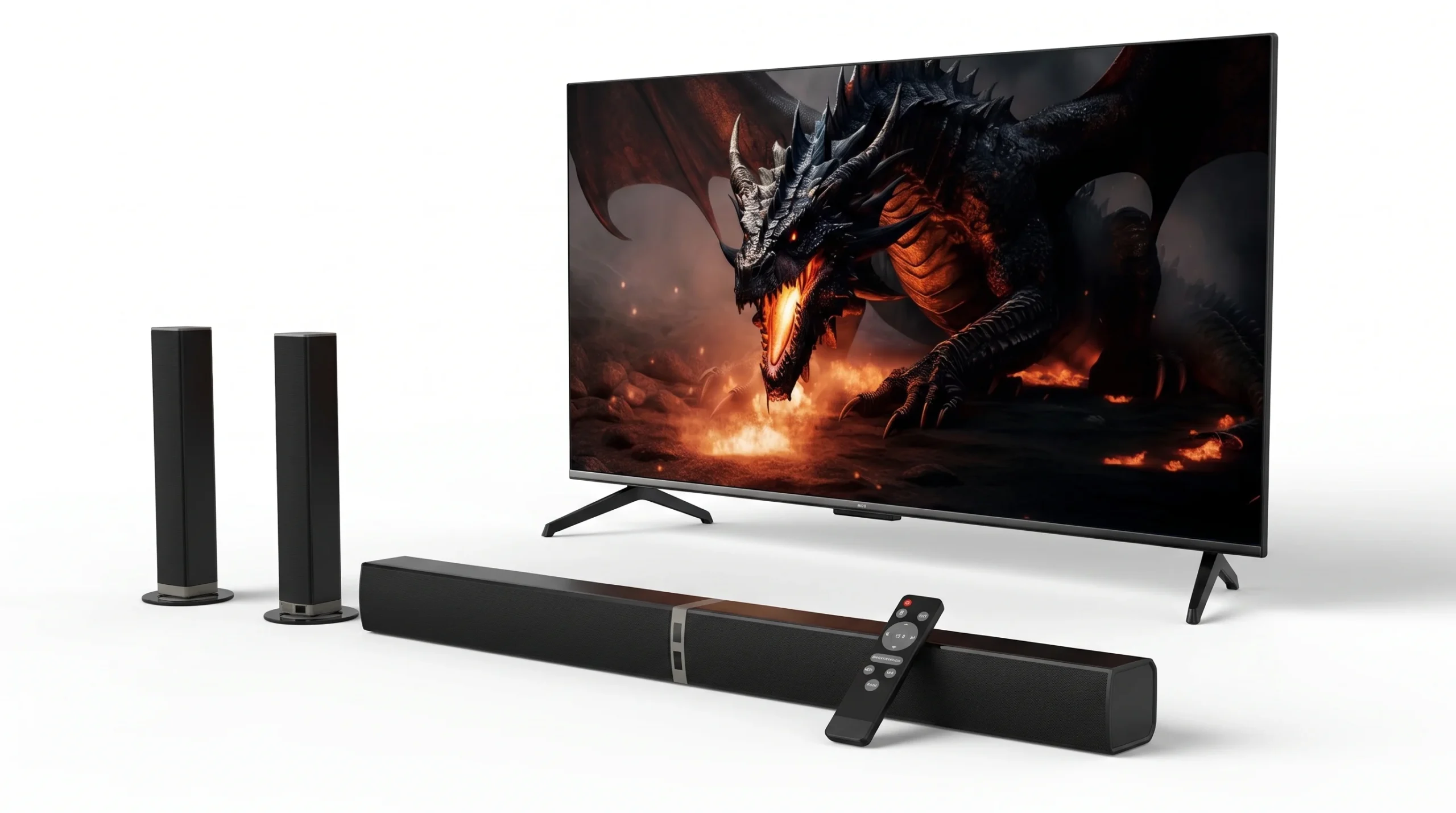
The MZEIBO is the most interesting choice here if you want to improve ordinary TV sound without moving into the price range of a premium smart soundbar. Its biggest advantage is flexibility: the two-part design can work as one soundbar or as separated speaker units.
MZEIBO lists four full-range drivers, 80W output, Bluetooth, ARC, optical and AUX connectivity, plus Movie, Music and News modes. The detachable design is the feature that really separates it from conventional entry-level soundbars.
That flexibility makes sense for bedrooms, smaller living rooms, desks and basic gaming setups. It is not the model I would choose for someone specifically chasing a sophisticated Dolby Atmos theater, but it is a practical upgrade for buyers whose main goal is clearer and fuller TV audio without spending several hundred dollars.
Key Specifications
| Specification | Details |
|---|---|
| Brand | MZEIBO |
| Output | 80W |
| Design | 2-in-1 detachable soundbar |
| Connectivity | Bluetooth, HDMI ARC, Optical, AUX |
| Drivers | Four full-range drivers |
| Audio Mode | Stereo |
| EQ Modes | Movie, Music, News |
| Placement | Tabletop, vertical or wall-mounted |
How It Performs in Real-World Use
The detachable architecture gives the MZEIBO more placement freedom than a conventional single-bar design. Used as one unit, it fits naturally below a TV. Separated, the two sections can create wider left/right positioning, which may be useful when the TV stand has enough room.
ARC is particularly useful for a TV setup because it can reduce cable clutter and allow TV audio to feed directly into the soundbar. Optical and AUX give older TVs, computers and other devices additional connection options.
Who Should Buy It?
- Buyers upgrading basic built-in TV speakers.
- People who want a flexible detachable design.
- Bedroom and small-to-medium-room users.
- PC, laptop and casual gaming users.
- Buyers who want several wired connection options.
Who Should Avoid It?
- Buyers specifically looking for true Dolby Atmos immersion.
- Large-room home theater enthusiasts.
- People wanting a premium multiroom audio ecosystem.
- Users who expect a dedicated subwoofer.
Pros
- Flexible detachable 2-in-1 design
- 80W stated output
- HDMI ARC, optical and AUX
- Bluetooth wireless playback
- Useful Movie, Music and News modes
Cons
- No premium smart-home ecosystem
- No dedicated subwoofer
- Not designed as a high-end Atmos system
- Stereo-focused presentation
- Best suited to modest room sizes
Overall
The MZEIBO is an appealing all-purpose choice when flexibility and affordability matter more than advanced surround formats. Its detachable design gives it a genuine reason to exist alongside traditional soundbars.
FUNLOGY Sound Bar — 100W 2.1CH Bluetooth Soundbar
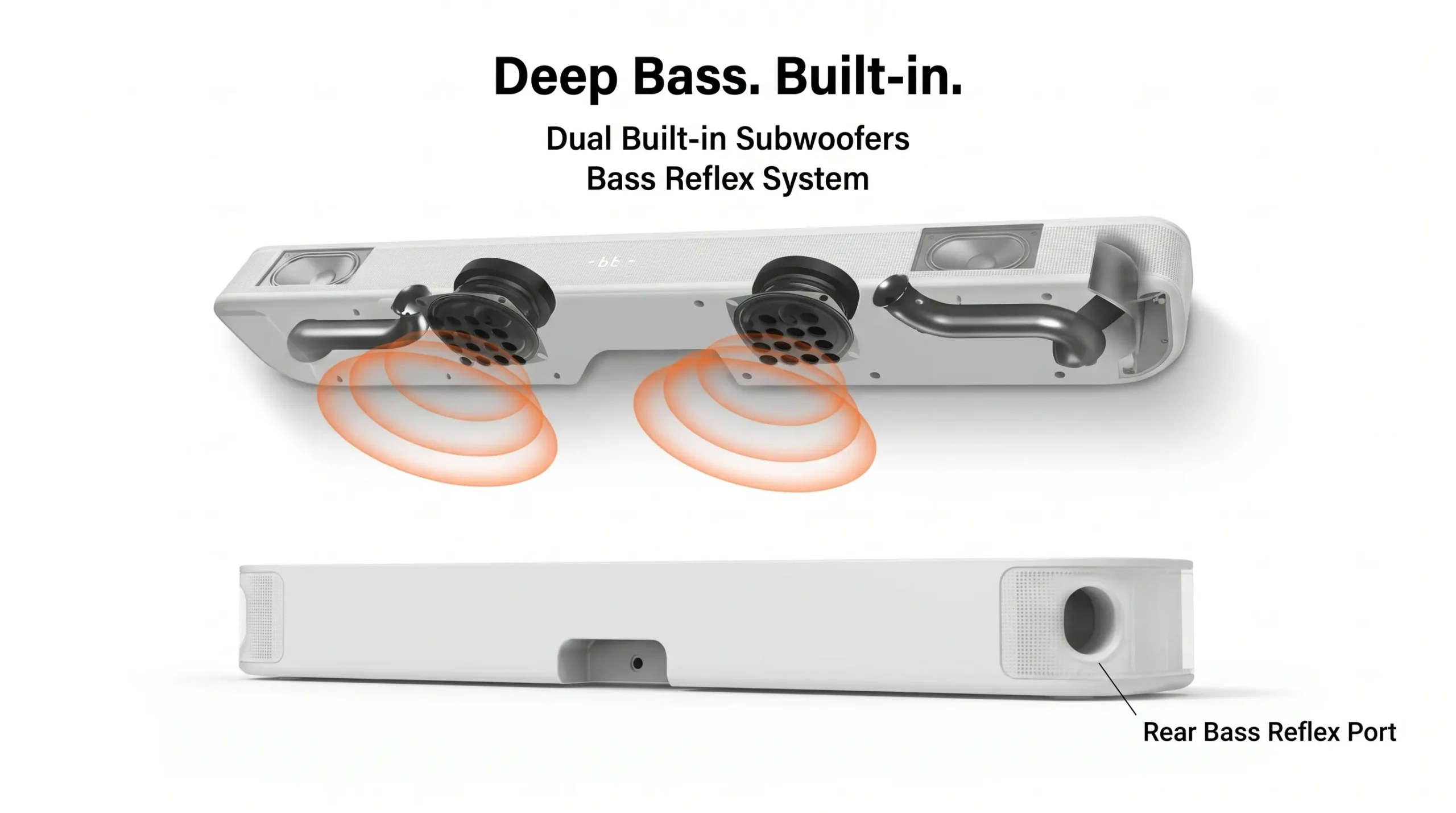
FUNLOGY takes a more conventional approach: a 2.1-channel layout with a stronger emphasis on bass and straightforward TV connectivity. It makes the most sense for buyers who want a fuller upgrade over built-in speakers without needing a sophisticated wireless ecosystem.
The supplied product information lists 100W 2.1-channel sound, HDMI ARC, optical and AUX inputs, Bluetooth 5.0, remote control and dialogue-focused features including DRC and EQ modes.
The important distinction is that this is still fundamentally a value-oriented stereo soundbar. Buyers should not confuse its 100W rating with the immersive surround presentation of a full multi-speaker home theater system.
Key Specifications
| Specification | Details |
|---|---|
| Brand | FUNLOGY |
| Configuration | 2.1-channel |
| Stated Output | 100W |
| Connectivity | HDMI ARC, Optical, AUX, Bluetooth |
| Bluetooth | Bluetooth 5.0 |
| Control | Remote control |
| Placement | Tabletop |
How It Performs in Real-World Use
The 2.1-channel configuration is aimed at making TV audio sound bigger and more balanced than typical television speakers. A setup like this is particularly useful for movies, sports and general streaming where extra bass and clearer dialogue matter more than precise surround positioning.
The dialogue-oriented features are also useful for apartments or bedrooms where turning the volume up aggressively is not always practical.
Who Should Buy It?
- TV owners wanting stronger bass.
- Movie and sports viewers.
- Apartment or bedroom users.
- Buyers who prefer simple remote control.
- Users needing HDMI ARC and optical connectivity.
Who Should Avoid It?
- Dolby Atmos enthusiasts.
- Buyers wanting rear surround speakers.
- Users seeking an expandable smart audio ecosystem.
- People who prioritize premium music streaming features.
Pros
- 2.1-channel configuration
- 100W stated system output
- HDMI ARC support
- Optical and AUX inputs
- Dialogue-focused DRC/EQ features
Cons
- No true rear-speaker surround setup
- No premium multiroom platform
- Lower-end feature set than Sonos
- Limited ecosystem expansion
- Value depends heavily on current price
Overall
The FUNLOGY is a straightforward option for buyers who mainly want louder, fuller and more intelligible TV audio. Its 2.1-channel design gives it a clear purpose, but the system should be judged as a value stereo solution rather than a premium theater replacement.
Sonos Beam Gen 2 — Dolby Atmos Smart Soundbar
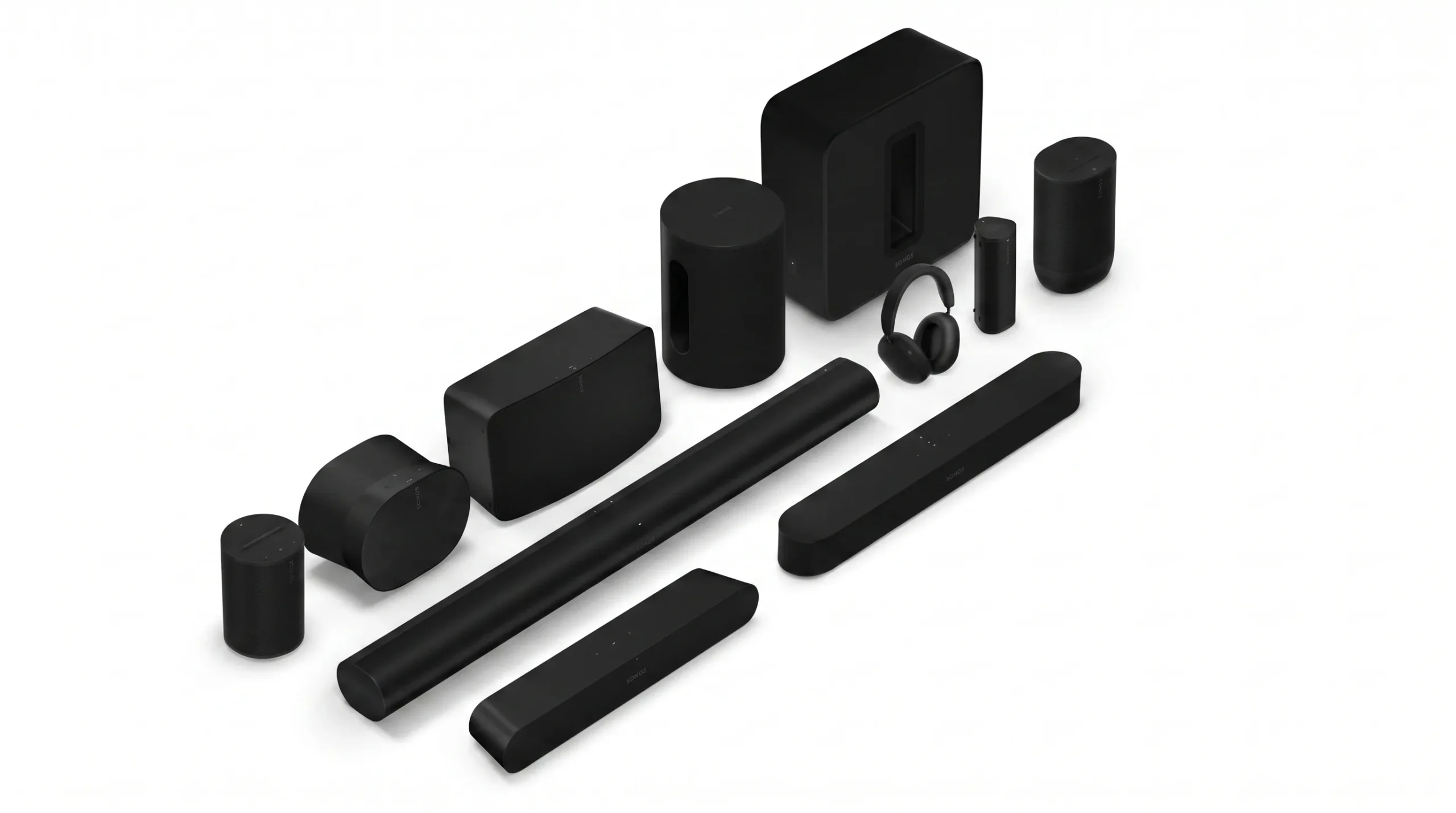
The Beam Gen 2 is the most balanced choice in this group for buyers who care about sound quality, smart features, compact dimensions and long-term expandability without stepping all the way up to the Arc Ultra.
Sonos lists Dolby Atmos support, HDMI eARC, Wi-Fi, Trueplay tuning, AirPlay 2, voice control and compatibility with additional Sonos speakers. The compact 25.63-inch-wide body also makes it considerably easier to place than a large premium soundbar.
The big advantage is ecosystem flexibility. You can start with the Beam and expand later with compatible Sonos speakers or a subwoofer. That makes it much more than a simple TV speaker upgrade.
Key Specifications
| Specification | Details |
|---|---|
| Brand | Sonos |
| Audio Format | Dolby Atmos supported |
| Connectivity | HDMI eARC/ARC, Wi-Fi, Ethernet |
| Streaming | AirPlay 2 and Sonos ecosystem |
| Room Tuning | Trueplay |
| Dimensions | 25.63 × 3.94 × 2.68 inches |
| Weight | 6.35 lb |
How It Performs in Real-World Use
This is where the Beam Gen 2 makes a strong case. Its compact footprint makes it easy to pair with a medium-size TV, while HDMI eARC allows supported televisions and sources to pass higher-quality audio formats.
Trueplay is another practical advantage because it allows the soundbar to tune its response around the room. Sonos also supports Speech Enhancement and Night Sound features, giving buyers more control over dialogue and late-night listening.
For music, the Beam also benefits from the wider Sonos platform. It can function as part of a multiroom system rather than becoming obsolete if you later upgrade your home theater.
Who Should Buy It?
- Buyers wanting a compact Dolby Atmos soundbar.
- Users who value smart-home integration.
- Music listeners wanting a broader ecosystem.
- Apartment and medium-room users.
- People who may expand their home theater later.
Who Should Avoid It?
- Buyers wanting the biggest possible soundstage from one bar.
- Large-room home theater enthusiasts.
- People who dislike premium ecosystem pricing.
- Users who want included rear speakers from day one.
Pros
- Dolby Atmos support
- Compact and attractive design
- HDMI eARC/ARC connectivity
- Trueplay room tuning
- Excellent upgrade path within Sonos
Cons
- Premium pricing for a compact bar
- Rear speakers cost extra
- Subwoofer costs extra
- Best features depend on the Sonos ecosystem
- Not the biggest option for large rooms
Overall
The Beam Gen 2 is the safest all-around recommendation here. It combines compact size, Dolby Atmos, strong connectivity, smart features and expandability in a way that makes sense for a wide range of buyers.
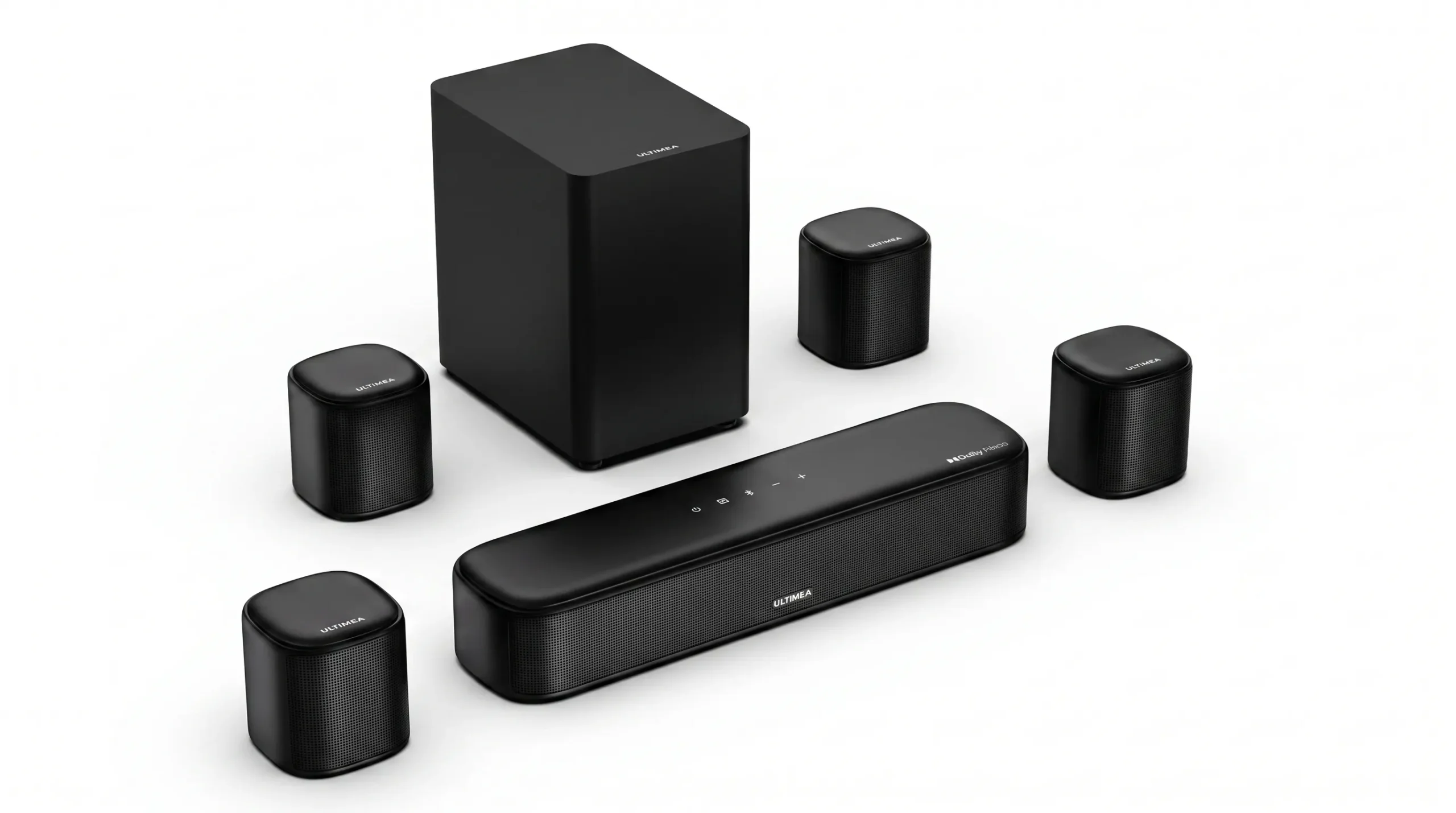
ULTIMEA Aura A60 — 7.1CH Dolby Atmos Surround Sound System
If your priority is getting a genuine multi-speaker home theater setup without paying flagship Sonos money, the Aura A60 is arguably the most compelling value proposition in this comparison.
ULTIMEA lists a 7.1-channel configuration, Dolby Atmos support, four surround speakers, a subwoofer, 350W peak power, HDMI eARC, Bluetooth 5.3, optical, AUX and USB connectivity.
That hardware layout changes the buying equation. Instead of relying mainly on virtual processing from a single bar, the Aura A60 includes physical surround speakers designed to create a wider sound field.
Key Specifications
| Specification | Details |
|---|---|
| Brand | ULTIMEA |
| Configuration | 7.1-channel |
| Dolby Atmos | Supported |
| Peak Output | 350W |
| Surround Speakers | Four |
| Connectivity | HDMI eARC, Optical, AUX, USB, Bluetooth 5.3 |
| Subwoofer | Included |
| EQ | Movie, Music, Voice, Sport, Game, Night |
How It Performs in Real-World Use
The biggest advantage is physical speaker placement. Four surround speakers and a dedicated subwoofer give the Aura A60 a fundamentally different approach from the MZEIBO and FUNLOGY bars.
For movies and gaming, that can be much more useful than simply increasing the output of a single soundbar. The subwoofer also gives the system a clearer route to deeper low-frequency impact.
There is a trade-off: a multi-speaker system requires more space and more installation than a compact single-bar solution. ULTIMEA also states that Dolby Atmos requires compatible HDMI eARC connections and that the system does not support DTS decoding.
Who Should Buy It?
- Movie fans wanting physical surround speakers.
- Gamers who want a more immersive room setup.
- Buyers wanting Dolby Atmos at a lower price than flagship systems.
- Users with dedicated TV-room space.
- People who want a subwoofer included.
Who Should Avoid It?
- Small apartments with limited speaker placement options.
- Buyers wanting the simplest possible setup.
- People heavily invested in the Sonos ecosystem.
- Users who specifically require DTS decoding.
Pros
- 7.1-channel physical speaker system
- Four surround speakers
- Dedicated subwoofer
- Dolby Atmos support
- 350W peak output
Cons
- More complicated installation
- Requires more room than a single bar
- No DTS decoding
- More cables and components
- Less elegant ecosystem than Sonos
Overall
The Aura A60 is the model to consider when immersive surround sound matters more than simplicity. It delivers a much more traditional home theater concept for buyers who have the space to accommodate it.
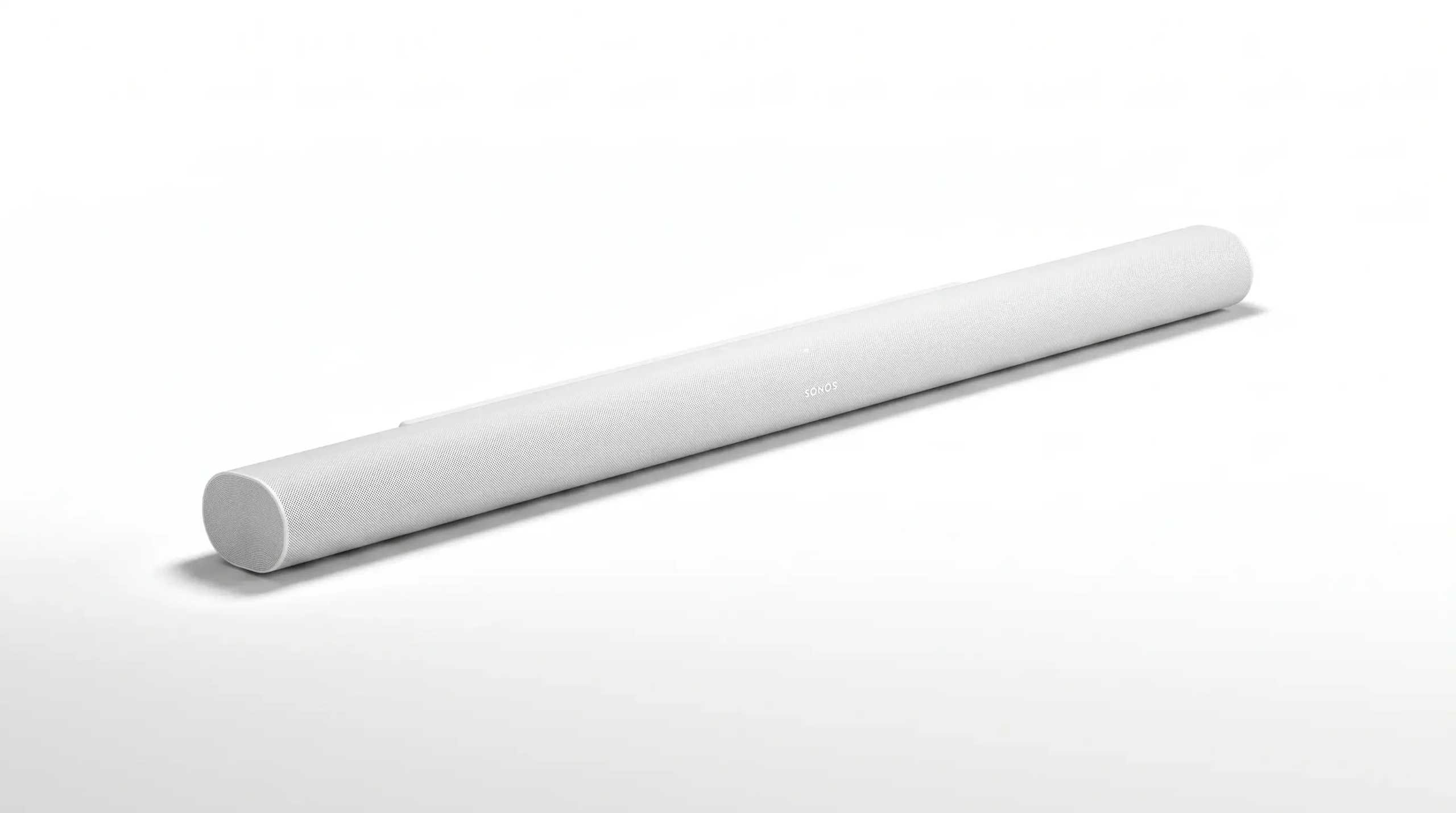
Sonos Arc Ultra — 9.1.4 Dolby Atmos Soundbar
The Arc Ultra is the obvious choice for buyers who want the most sophisticated single-bar experience in this comparison and are willing to pay flagship money for it.
Sonos describes Arc Ultra as a 9.1.4 spatial-audio soundbar using Sound Motion technology, 14 Sonos-engineered drivers, Dolby Atmos, Trueplay and advanced Speech Enhancement.
Its biggest advantage over the Beam is scale. The Arc Ultra is designed to create a much larger sound field and can be expanded with Sonos Sub and Era speakers for a more complete theater system.
Key Specifications
| Specification | Details |
|---|---|
| Brand | Sonos |
| Spatial Audio | 9.1.4 |
| Audio Format | Dolby Atmos |
| Drivers | 14 Sonos-engineered drivers |
| Connectivity | HDMI, Wi-Fi, Bluetooth |
| Room Tuning | Trueplay |
| Dialogue | AI-powered Speech Enhancement |
| Expansion | Sonos Sub and compatible rear speakers |
How It Performs in Real-World Use
The Arc Ultra is designed for larger TVs and buyers who want a cinematic presentation without immediately filling the room with separate speakers. Its upward-firing tweeters and 9.1.4 processing are specifically intended to create height and spatial effects.
Dialogue is another strong point. Sonos says its Speech Enhancement feature uses AI to detect human voices and offers four customizable levels.
The catch is simple: this is an expensive system. Once you add a Sonos subwoofer and rear speakers, the total investment can become substantial. It makes the most sense when sound quality and ecosystem integration are genuine priorities rather than occasional extras.
Who Should Buy It?
- Premium home theater buyers.
- Owners of large TVs.
- Sonos ecosystem users.
- Movie and streaming enthusiasts.
- Buyers wanting a premium single-bar starting point.
Who Should Avoid It?
- Budget-conscious buyers.
- Small-room users who do not need a large soundstage.
- People satisfied with basic TV audio improvements.
- Buyers unwilling to pay for ecosystem expansion.
Pros
- 9.1.4 Dolby Atmos spatial audio
- 14-driver acoustic architecture
- Excellent dialogue enhancement
- Trueplay room tuning
- Strong Sonos expansion options
Cons
- High purchase price
- Subwoofer and surrounds cost extra
- Overkill for small rooms
- Best value comes within the Sonos ecosystem
- Premium total-system cost can rise quickly
Overall
The Arc Ultra is the clear luxury choice. It delivers the most advanced spatial-audio proposition here, but the price means it is only the right choice for buyers who will actually use and appreciate the additional capability.
Product Comparison
| Product | Best For | Key Advantage | Main Trade-Off |
|---|---|---|---|
| MZEIBO 80W | Flexible budget setup | Detachable design | No premium Atmos ecosystem |
| FUNLOGY 100W 2.1CH | TV and everyday viewing | 2.1-channel bass-focused design | Limited surround capability |
| Sonos Beam Gen 2 | Most buyers | Atmos + smart ecosystem | Expansion costs extra |
| ULTIMEA Aura A60 | Affordable home theater | 7.1 speakers + subwoofer | More complex setup |
| Sonos Arc Ultra | Premium buyers | 9.1.4 spatial audio | High price |
Buyer Decision Table
| Product | System Type | Atmos | Connectivity | Best Room Type |
|---|---|---|---|---|
| MZEIBO | Detachable stereo | No | ARC / Optical / AUX / Bluetooth | Small to medium |
| FUNLOGY | 2.1CH | Not specified | HDMI ARC / Optical / AUX / Bluetooth | Small to medium |
| Beam Gen 2 | Smart soundbar | Yes | HDMI eARC / Wi-Fi / Ethernet | Small to medium |
| Aura A60 | 7.1 surround system | Yes | eARC / Optical / AUX / USB / Bluetooth | Medium |
| Arc Ultra | Premium smart soundbar | Yes | HDMI / Wi-Fi / Bluetooth | Medium to large |
🛒 Should You Buy?
| Grab These If… | Skip These If… |
|---|---|
| You want a compact smart soundbar → Beam Gen 2 | You need the cheapest possible TV speaker upgrade → consider MZEIBO/FUNLOGY |
| You want physical surround speakers → Aura A60 | You have almost no space for extra speakers → avoid Aura A60 |
| You want premium spatial audio → Arc Ultra | You do not care about Atmos or smart features → Arc Ultra may be unnecessary |
| You want flexible placement → MZEIBO | You want a full cinematic surround system → MZEIBO is not the strongest fit |
| You want simple 2.1 TV audio → FUNLOGY | You want an expandable premium ecosystem → choose Sonos |
Our Research-Based Comparison
This comparison considers manufacturer specifications, available product information, connectivity, audio formats, speaker configuration, intended room size, expansion possibilities, buyer priorities and value.
The most important distinction is that these five products are not really competing on exactly the same terms. MZEIBO and FUNLOGY focus on affordable TV-audio upgrades. Beam Gen 2 introduces a premium smart-audio ecosystem. Aura A60 takes a physical-surround approach. Arc Ultra sits at the flagship end of the category.
That means there is no single winner for every buyer. The right purchase depends on whether you value simplicity, physical surround sound, smart features, compact design or maximum premium performance.
Price & Value
Retail prices for soundbars change frequently, especially during Amazon promotions and seasonal sales. The supplied listing data showed approximately $53.99 for the MZEIBO, $109.99–$119.99 for FUNLOGY depending on color, $399 for the supplied Beam Gen 2 listing, $198 for the supplied Aura A60 listing, and $899 for the supplied Arc Ultra listing.
Those prices should be treated as listing snapshots rather than permanent prices. Sonos currently lists Beam Gen 2 at $499 and Arc Ultra at $1,099 on its official US store, illustrating why retailer discounts can materially change the value calculation.
For pure hardware-per-dollar home theater capability, the Aura A60 is particularly interesting because it includes a subwoofer and four surround speakers. For long-term smart-audio flexibility, Beam Gen 2 is easier to justify. Arc Ultra is worth the extra money mainly for buyers who genuinely want its larger spatial-audio capability.
Best Alternatives
If none of these five fits your setup, consider looking at established alternatives from Samsung, Sony, JBL and other major home-theater brands. The exact model should be chosen based on current availability, room size, TV compatibility and price rather than simply brand name.
Buying Guide
1. Check HDMI ARC or eARC
HDMI ARC/eARC is usually the easiest connection for modern TVs. It can also simplify control through the TV remote. Dolby Atmos compatibility can depend on the TV, connection type and source device.
2. Decide Whether You Need Real Surround Speakers
A single soundbar can create a wide soundstage, but a system such as the Aura A60 uses additional physical speakers. If surround effects are your priority and you have room for extra speakers, that design can make more sense.
3. Consider Room Size
A compact soundbar is often enough for a bedroom or small living room. Larger rooms benefit from a more powerful and wider system, particularly when the seating position is far from the TV.
4. Do Not Shop by Wattage Alone
A higher wattage number does not automatically mean better sound. Speaker configuration, driver design, processing, room acoustics and placement all matter.
5. Think About Dialogue
If you frequently struggle to understand voices, look for dedicated dialogue enhancement or speech features. Sonos Beam Gen 2 and Arc Ultra both include features designed to improve speech clarity.
6. Think About Expansion
If you expect to build a larger system later, Beam Gen 2 and Arc Ultra have a major advantage through the Sonos ecosystem.
7. Check Your TV Before Buying
Confirm whether your TV has HDMI ARC/eARC, optical output or another supported connection. Also verify Dolby Atmos compatibility if that is a major reason for buying.
FAQ
Which soundbar is best overall?
For the widest range of buyers, the Sonos Beam Gen 2 is the strongest overall choice because it combines Dolby Atmos, compact dimensions, smart features, room tuning and an expandable ecosystem.
Which soundbar offers the best value?
The ULTIMEA Aura A60 is especially compelling for buyers who want a complete surround system because it includes a subwoofer and four surround speakers. MZEIBO and FUNLOGY are better suited to simpler budget upgrades.
Is Sonos Beam Gen 2 worth buying?
Yes, especially if you value compact design, Dolby Atmos, music streaming and future expansion. Its main drawback is that adding a subwoofer or rear speakers increases the total cost.
Which model is best for a real home theater?
The Aura A60 is the most complete physical surround package in this comparison. The Arc Ultra is the stronger premium single-bar starting point for buyers who want a sophisticated Sonos system.
Which soundbar is best for gaming?
The answer depends on your TV and console setup. Aura A60 is attractive if physical surround speakers matter, while Beam Gen 2 and Arc Ultra are better choices for buyers who want Dolby Atmos and a premium ecosystem.
Is the Arc Ultra worth the extra money?
It can be, but only for buyers who want premium spatial audio and plan to take advantage of the Sonos ecosystem. For casual TV viewing, Beam Gen 2 is the more sensible purchase.
What should I check before buying a soundbar?
Check HDMI ARC/eARC support, Dolby Atmos compatibility, room size, speaker configuration, dialogue features, connectivity, subwoofer requirements and whether you want an expandable ecosystem.
Do I need a subwoofer with a soundbar?
Not necessarily. A compact soundbar can be enough for everyday TV use. A dedicated subwoofer becomes more valuable if you watch action movies, listen to bass-heavy music or want a stronger home-theater effect.
Final Verdict
Sonos Beam Gen 2
The best balance of sound, smart features, Dolby Atmos, size and future expansion.
ULTIMEA Aura A60
The strongest choice when you want physical surround speakers and a subwoofer without flagship pricing.
Sonos Arc Ultra
The most advanced single-bar experience here, with 9.1.4 spatial audio and premium ecosystem support.
MZEIBO 80W Detachable Soundbar
A flexible and affordable option for buyers who value detachable placement and simple connectivity.
FUNLOGY 100W 2.1CH
A straightforward option for buyers wanting stronger TV audio and bass without a complicated system.

If I Were Helping a Friend Choose
For most people, I'd recommend the Sonos Beam Gen 2. It avoids the limitations of very cheap soundbars without jumping straight into flagship pricing. It also gives you a path to expand the system later.
If the priority is getting as much physical surround hardware as possible for the money, I'd look closely at the ULTIMEA Aura A60 instead.
And if money is less important than getting the most advanced experience in this lineup, the Sonos Arc Ultra is the clear premium pick.
Final Buyer Summary
| Buyer Type | Recommended Product | Why |
|---|---|---|
| Best Overall | Sonos Beam Gen 2 | Best balance of features, size and ecosystem |
| Best Value | ULTIMEA Aura A60 | Physical surround speakers plus subwoofer |
| Premium Buyer | Sonos Arc Ultra | 9.1.4 Dolby Atmos spatial audio |
| Budget Buyer | MZEIBO 80W | Flexible design and multiple inputs |
| Best for Gaming | ULTIMEA Aura A60 | Physical surround setup and subwoofer |
| Best for Everyday TV | Sonos Beam Gen 2 | Compact design and dialogue features |
Affiliate Disclosure
This article may contain affiliate links. If you purchase a product through one of these links, we may earn a commission at no additional cost to you. Our recommendations are based on product research, specifications, features, value, and buyer usefulness—not on the commission we may receive.