
Affiliate disclosure: This review contains affiliate links. If you buy through them, we may earn a commission at no extra cost to you.
💰 BEST VALUESony SA-CS9M2 10-Inch Subwoofer Review
"A proven 10-inch platform with tight, low-vibration bass — and at 38% off, it's the easiest subwoofer upgrade to justify this year."
Here's the problem most home theater setups have: the speakers handle voices and effects just fine, but explosions land with a thud instead of a rumble, and music sounds thin the moment you turn it up. That's the gap a subwoofer fills — and it's the one upgrade that changes how your whole system feels, not just how it sounds.
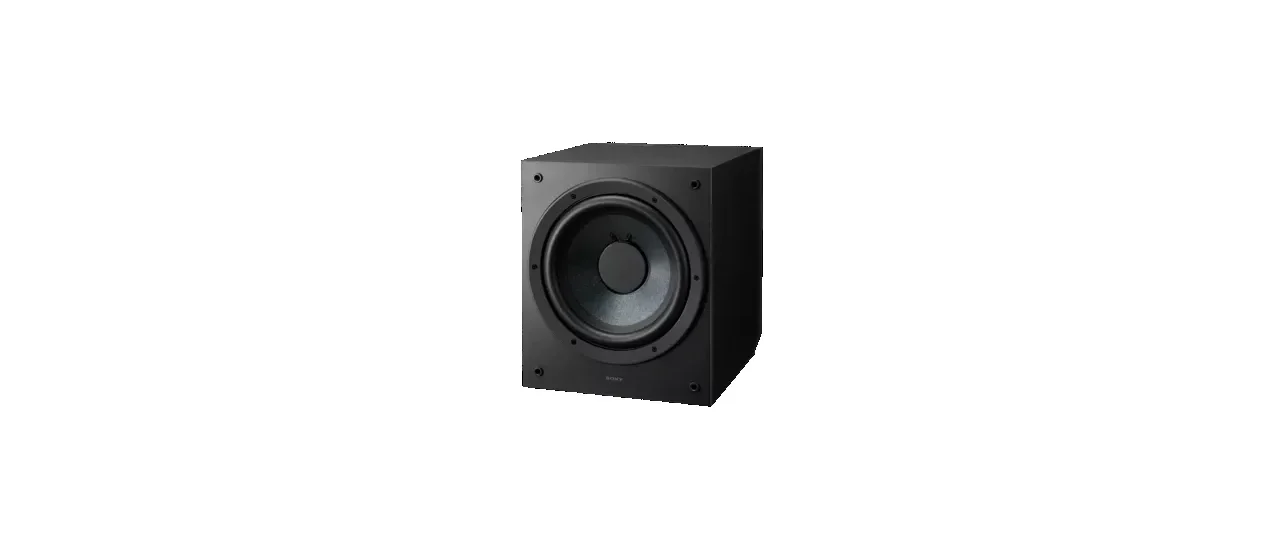
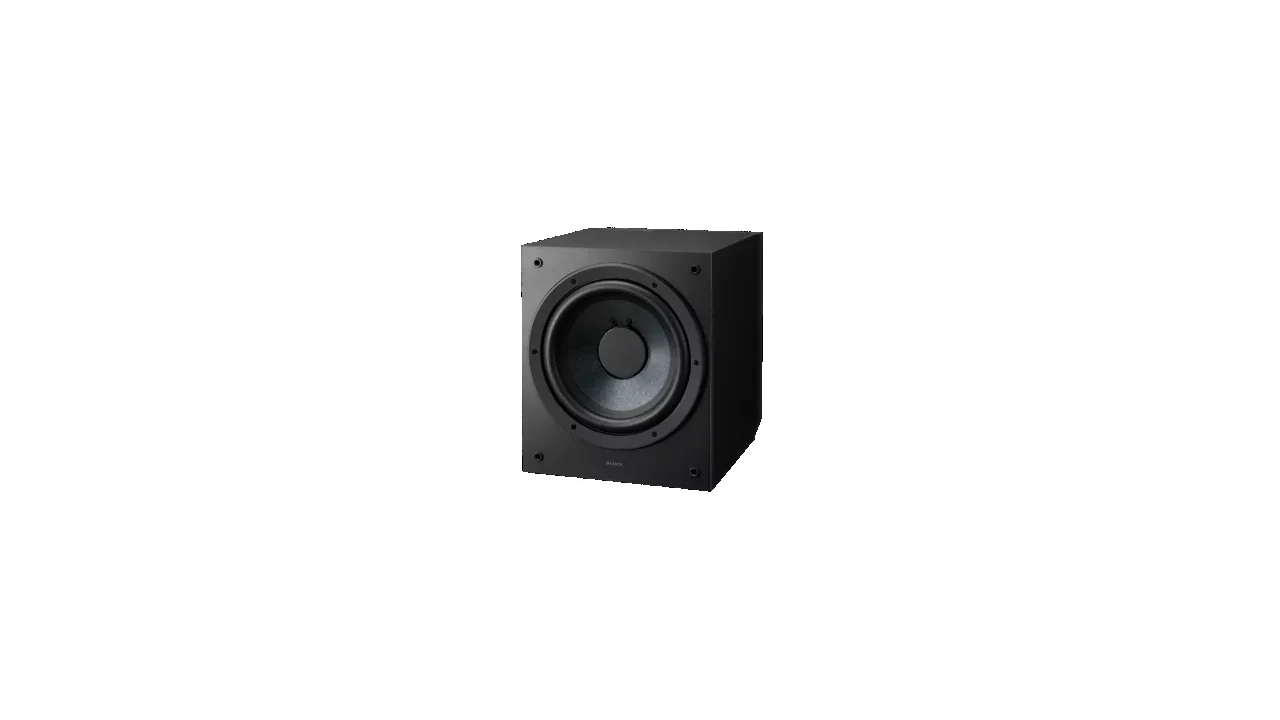
The Sony SA-CS9M2 is Sony's refreshed take on its long-running 10-inch CS-series subwoofer. Same formula buyers have liked for years — a 10-inch reinforced cone, bass reflex cabinet, and a compact box that fits where bigger subs won't — now sitting at $203, down 38% from its $329.99 list price. That's a limited-time deal, so verify the current price before buying.
This review breaks down what the SA-CS9M2 actually offers: the listed specifications translated into real buyer benefits, what it's likely to feel like in movies and music, where it falls short, and how it stacks up against the Polk and Klipsch alternatives at similar money. No hands-on claims here — this is an analysis of the specs, features, and buyer fit, written so you can decide with confidence.
Quick Verdict
- Our Verdict
- A strong value pick while the 38%-off deal lasts — proven 10-inch platform, tight bass, easy setup.
- Best For
- First-time home theater builders and anyone upgrading from TV or soundbar bass.
- Main Strength
- Deep, controlled 10-inch bass from a compact bass-reflex cabinet at a rare discount.
- Main Weakness
- Thin review base so far (15 ratings) and a 10-inch driver won't pressurize very large rooms.
- Rating
- 8.7/10 — Very Good (based on listed specs, the 4.6/5 marketplace rating, and deal value — not hands-on testing)
What the Sony SA-CS9M2 Actually Is
The SA-CS9M2 is an active (self-powered) 10-inch subwoofer — meaning the amplifier is built in, so you don't need a separate amp or a receiver with subwoofer power. You connect it to your AV receiver's subwoofer output (or speaker terminals), dial in the level and crossover, and it handles everything below roughly 200 Hz on its own.
Sony's pitch centers on three things. First, the bass reflex enclosure: tuned ducts that suppress unwanted noise and reinforce low frequencies, so you get deeper bass from a smaller box than a sealed design could manage. Second, low vibration: the cabinet absorbs rear pressure waves and damps internal movement, which is what keeps bass tight and punchy instead of boomy and muddy. Third, the reinforced cellular cone — a stiff, light 10-inch driver (the previous generation used a foamed-mica cellular diaphragm) that moves air efficiently without flexing.
The practical upshot: this is a subwoofer aimed squarely at normal living rooms, not dedicated theater caves. It's compact enough for tight spots, simple enough that a first-timer can set it up in an evening, and — at the current $203 deal price — it undercuts most of its direct competition while carrying the Sony badge. The main thing it won't do is defy physics: a single 10-inch driver in a compact box has output limits, and very large open-plan rooms will ask more of it than it can give.
Key Specifications
| Specification | Details |
|---|---|
| Brand / Model | Sony SA-CS9M2 (CS Speaker Home Theater Series) |
| Type | Active (powered) subwoofer |
| Driver | 10-inch (25 cm) reinforced cellular cone |
| Amplifier | 115 W (6 Ω, 80 Hz, 10% THD) — listed for the CS9 platform |
| Frequency response | 28–200 Hz (listed) |
| Enclosure | Bass reflex, wood cabinet |
| Inputs | Speaker-level and line-level (RCA cord included in the box) |
| Controls | Level adjust, cutoff frequency adjust, phase switch, power-save (auto on/off) |
| Dimensions | 18.7" D × 14.8" W × 17.4" H (listed) |
| Weight | Approx. 21 lbs (listed) |
Specifications are compiled from Sony's product page and retailer listings for the CS9 platform. Check the latest manufacturer or retailer listing before buying.
Real-World Performance: What It Likely Feels Like
On paper, 28–200 Hz with 115 watts won't win a spec-sheet war against 12-inch monsters. In practice, though, this is the range where most of the magic happens for movie night. Explosions, engine rumbles, and cinematic bass drops live between about 30 and 80 Hz — right in this sub's wheelhouse. Based on the listed specifications, expect action scenes to gain real weight: the kind of low-end thump you feel in your chest during a car chase, rather than the flat tap you get from TV speakers or a soundbar.
For music, the bass reflex design and vibration damping matter more than raw wattage. A kick drum should land with a defined punch rather than a lingering boom, and bass guitar lines should stay articulate instead of blurring into the mix. That's the practical benefit of the low-vibration cabinet: it keeps the driver honest. It won't reach the subterranean depths of a big sealed 12-inch sub — pipe-organ lows and the very bottom octave of electronic music will be suggested rather than fully rendered — but for rock, pop, hip-hop, and jazz in a normal room, the listed response is genuinely useful.
Gaming is where a sub like this quietly earns its keep. Footsteps, reloads, and environmental rumble gain a physicality that headphones and small speakers can't fake. And because the SA-CS9M2 is compact, it tucks beside a media console or behind a couch without dominating the room — placement flexibility that bigger subs simply don't offer. One honest caveat: in a large open-plan living area, a single 10-inch driver will run out of steam before it pressurizes the space. For small to medium rooms, it's in its element; for great rooms, you'd want to step up in size.
Design and Build Quality
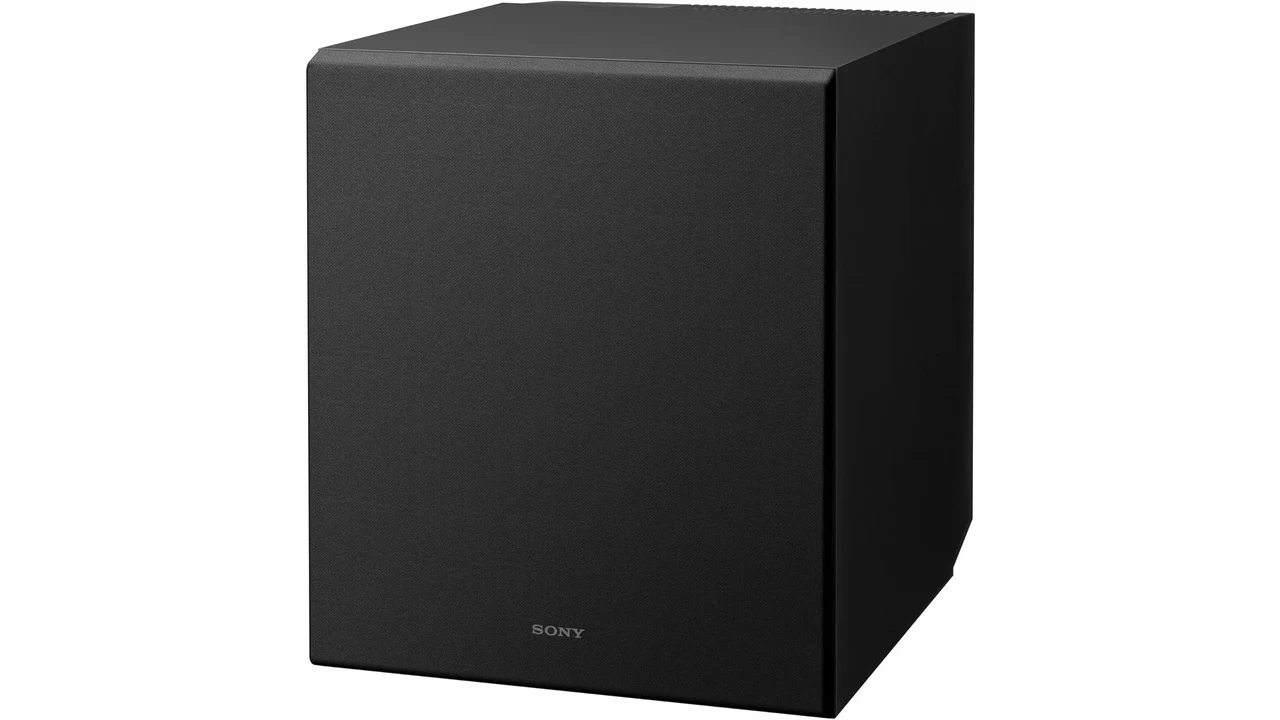
The SA-CS9M2 keeps the understated black-box look of the CS series — no flashy trim, no glowing logos, just a clean cabinet that disappears next to a TV stand. That's a deliberate choice, and for most buyers it's the right one: a subwoofer should be heard, not noticed. The wood cabinet (rather than thin plastic) is a meaningful build decision at this price, since cabinet rigidity directly affects how clean the bass stays when things get loud.
The rear panel is refreshingly simple: level and cutoff-frequency knobs, a phase switch, and a power-save mode, plus speaker-level and line-level inputs. There's nothing to learn and nothing to misconfigure badly — a welcome contrast to app-controlled subs that bury basic settings three menus deep. The trade-off is a lack of modern conveniences: no wireless connectivity, no app control, no room-correction mic. You set it by ear, which is fine for most people but less precise than automated calibration.
At roughly 21 pounds and under 19 inches deep, it's genuinely easy to place — and "compact" here isn't marketing fluff. Many competing 10-inch subs are deeper or taller. The one design compromise worth knowing: the grille and finish are functional rather than luxurious. It looks like a $200–$300 subwoofer, because that's what it is.
Features That Actually Matter
10-inch reinforced cellular cone
What it does: A stiff, lightweight 10-inch driver moves more air with less flex than a smaller or flimsier cone.
Why it matters: Less cone flex means less distortion when bass hits hard — the difference between a tight kick drum and a muddy whomp.
Limitation: It's still a 10-inch driver; it won't match the sheer output of a 12-inch sub in a big room.
Bass reflex enclosure with tuned ducts
What it does: Ports in the cabinet reinforce low frequencies and vent unwanted noise away from the driver.
Why it matters: You get deeper perceived bass from a compact box — the main reason this sub works in tight spots.
Limitation: Ported designs can sound slightly less "tight" than sealed boxes on very fast bass passages; placement near walls needs a little care.
Low-vibration cabinet design
What it does: Internal damping absorbs rear pressure waves and cabinet resonance.
Why it matters: Cabinet vibration is what makes cheap subs sound boomy. Damping keeps bass accurate at higher volumes.
Who benefits: Apartment dwellers and anyone who listens at moderate-to-high volume without wanting the box itself to buzz.
Cutoff frequency + level + phase controls
What it does: Dials on the back let you set where the sub takes over from your main speakers, how loud it plays, and its phase alignment.
Why it matters: Proper blending is what makes a sub "disappear" into the system instead of sounding like a separate boom box in the corner.
Limitation: Manual knobs, no app or auto-calibration — you'll set it by ear.
Speaker-level and line-level inputs (RCA cord included)
What it does: Connects to virtually any AV receiver — dedicated subwoofer output or plain speaker terminals.
Why it matters: Works with older receivers that lack a sub-out jack, and the included RCA cord means no extra cable purchase.
Power-save (auto on/off) mode
What it does: The sub wakes when it detects a signal and sleeps when the system goes quiet.
Why it matters: No reaching behind the cabinet to flip a switch every movie night; it just works.
Limitation: Very quiet passages can occasionally let it doze off — a common quirk of auto-sensing subs, fixed by nudging the level up slightly.
Pros and Cons
✅ Pros
- 38% off is a genuinely rare discount — $203 vs the $329.99 list price, matching the all-time low tracked for this model.
- Tight, controlled bass character — the bass reflex ducts plus vibration damping aim for accuracy over sheer boom.
- Compact enough for real rooms — under 19" deep and ~21 lbs, it fits where bigger 10" and 12" subs won't.
- Connects to almost any receiver — speaker-level and line-level inputs, with an RCA cord in the box.
- Simple, reliable operation — physical knobs for level/crossover/phase and auto on/off; nothing to update or configure via app.
❌ Cons
- Only 15 marketplace ratings so far — the 4.6/5 score is encouraging but a thin base for a "refreshed" model.
- 10 inches has output limits — large open-plan rooms will want a bigger driver or a second sub.
- No wireless or app control — setup is by ear with rear-panel knobs; no room-correction assistance.
- Listed 28 Hz floor, not subterranean — the very deepest pipe-organ and electronic lows are suggested rather than fully reproduced.
- Deal price is time-sensitive — at full $329.99 list, the value story gets much thinner against 12-inch rivals.
Who Should Buy It?
👍 Buy it if you…
- Are building your first real home theater and want the single most impactful upgrade.
- Currently rely on TV speakers or a soundbar and find movies sound thin.
- Have a small-to-medium living room where a compact sub fits better than a 12-inch box.
- Own other Sony CS-series speakers and want a timbre-matched subwoofer.
- Prefer simple gear — knobs and auto on/off over apps and firmware updates.
👎 Skip it if you…
- Need to fill a large open-plan great room — a single 10" driver will run out of headroom.
- Chase the deepest possible bass for pipe organ or bass-heavy electronic music.
- Want wireless connectivity or app-based room correction.
- Already own the previous SA-CS9 — the refresh is evolutionary, not a reason to upgrade.
- Are buying at full $329.99 list price — the deal is what makes this compelling.
🛒 Should You Buy It?
| ✅ Grab This If… | ❌ Skip This If… |
|---|---|
| You want the biggest bang-for-buck bass upgrade under $250 | You need maximum output for a very large room |
| Your room is small to medium and placement space is tight | You demand sub-25 Hz extension for the deepest content |
| You value tight, accurate bass over sheer rattling volume | You prefer the loudest-possible bass above all else |
| Your receiver is older and only has speaker-level outputs | You want app control and automatic room calibration |
| You're matching Sony CS-series bookshelf/center speakers | You already own a decent 10" or 12" subwoofer |
| The $203 limited-time price is still live when you check | The price has bounced back to $329.99 list |
Is It Worth the Money? (Value Analysis)
Let's do the deal math plainly: $203 versus a $329.99 list price is $127 off — a 38% discount that matches the lowest price ever tracked for this model. At $203, the SA-CS9M2 sits below the Polk PSW10's typical street price while offering more amplifier power on paper, and it dramatically undercuts 12-inch options like the Klipsch R-12SW. That's the core of the value story: you're paying budget-sub money for a mid-tier Sony platform.
Who gets the best value? First-time buyers, without question. If you're moving from no subwoofer to this one, the jump in movie impact per dollar is enormous — arguably the best $203 you can spend on a home theater. Sony CS-series owners also get strong value from a matched set. Who should spend less? If your room is tiny and your needs are modest, the Polk PSW10 sometimes dips near $129 and covers the basics. Who should spend more? Anyone with a big room should look at 12-inch subs instead of asking a 10-inch driver to do a 12-inch job.
One honest note on longevity: subwoofers don't go obsolete the way TVs do. A good $203 sub bought today will still be thumping in ten years, which makes the cost-per-movie-night math very friendly. Just remember the price is a limited-time deal — check the latest retailer price before buying, because at full list the alternatives get much more competitive.
The CS series is a full ecosystem, by the way — Sony lists matching bookshelf speakers (~$153), a center channel (~$123), Dolby Atmos up-firing modules (~$153), and a floor-standing speaker (~$173), so you can build out a complete Sony home theater around this sub over time.
Alternatives Worth Considering
Polk Audio PSW10 — the cheaper 10-inch classic
A 10-inch powered sub with 50W RMS / 100W dynamic power and a 35–200 Hz listed response. It's been the default budget recommendation for years and often streets around $129–$209.
Consider it if your budget is absolutely capped and you just need basic bass reinforcement. What it does worse: less amplifier power on paper and an older design. Why pick the Sony instead: more listed power and the current 38%-off deal make the Sony the stronger buy at $203.
Klipsch R-12SW — the step-up 12-inch
A 12-inch front-firing sub with 200W RMS / 400W peak power and 29–120 Hz response, usually found around $200–$250 on sale.
Consider it if your room is large and you want maximum output and deeper extension. What it does worse: it's bigger, heavier (~33 lbs), and less living-room-friendly. Why pick the Sony instead: compact size, simpler setup, and Sony-series matching for smaller rooms.
Sony SA-CS9 — the previous generation
The model the SA-CS9M2 refreshes: same 10-inch, 115W, 28–200 Hz platform that earned years of solid owner feedback.
Consider it if you find it discounted below the M2's price — the core performance is cut from the same cloth. Why pick the M2 instead: it's the current model with full warranty support and, right now, the deeper discount.
Quick Comparison
| Product | Best For | Key Feature | Main Advantage | Main Drawback |
|---|---|---|---|---|
| Sony SA-CS9M2 | Best value 10" upgrade | 115W, 28–200 Hz, low-vibration cabinet | 38%-off deal on a proven platform | Thin review base; 10" output limits |
| Polk Audio PSW10 | Tightest budgets | 50W RMS, 35–200 Hz | Often the cheapest 10" option | Less power; older design |
| Klipsch R-12SW | Large rooms, max output | 200W RMS, 12" driver, 29–120 Hz | Deeper, louder bass | Bulky 33-lb cabinet |
| Sony SA-CS9 | Discount hunters | Same 10" 115W platform | Proven track record, may be cheaper | Previous generation |
Buying Guide: What to Check Before Buying a Subwoofer
1. Room size first
A 10-inch sub suits small-to-medium rooms. Large open-plan spaces need a 12-inch driver or dual subs — no amount of EQ fixes a driver that's simply too small for the air volume.
2. RMS watts vs. peak watts
RMS (continuous) power is the honest number; "peak" or "maximum" figures are marketing gloss. The SA-CS9M2's 115W RMS is solid for its class — compare RMS to RMS, never RMS to peak.
3. Ported vs. sealed
Ported (bass reflex) boxes like this one play deeper from a smaller cabinet; sealed boxes tend to sound tighter but need more power and size for the same depth. For movies in normal rooms, ported is usually the pragmatic choice.
4. Frequency response, honestly
Look at the bottom number: 28 Hz here means genuinely deep bass for movies. Anything claiming response below ~25 Hz at this price deserves skepticism unless measured by a third party.
5. Crossover control
An adjustable cutoff (like the SA-CS9M2's) lets you hand off cleanly to your main speakers. Fixed-crossover subs are harder to blend and often sound "separate" from the system.
6. Inputs that match your receiver
Most modern receivers have a subwoofer/LFE output (RCA). Older ones may only offer speaker terminals — the Sony's speaker-level inputs cover both, which isn't true of every budget sub.
7. Placement flexibility
Corner placement boosts bass for free; a foot of distance from the wall tightens it. Compact subs give you more placement options, and placement matters more than most buyers expect — experiment before judging the sound.
8. Auto on/off
A power-save mode means the sub wakes with your system. It's a small convenience that you'll appreciate every single day you don't have to reach behind the cabinet.
Frequently Asked Questions
Is the Sony SA-CS9M2 worth buying?
At the $203 deal price (38% off $329.99), it's one of the stronger subwoofer values available — a proven 10-inch platform with tight, low-vibration bass at budget money. At full list price, the case is weaker, so check the current price before buying.
What's the difference between the SA-CS9M2 and the older SA-CS9?
The SA-CS9M2 is a refresh of the long-running SA-CS9: same 10-inch driver size, 115W amplification, and 28–200 Hz listed response on a shared platform, with updated styling and current-model warranty support. Owners of the older model don't need to upgrade.
Will it work with my AV receiver?
Almost certainly. It accepts both speaker-level inputs (for older receivers without a sub output) and line-level RCA input (an RCA cord is included in the box), so it connects to virtually any home theater receiver.
What size room is it good for?
Small-to-medium living rooms and bedrooms are its sweet spot. In large open-plan spaces, a single 10-inch driver will run out of headroom — consider a 12-inch sub like the Klipsch R-12SW instead.
Does it come with the cables I need?
Yes — an RCA cord and instruction manual are included in the box, so you can connect to a receiver's subwoofer output immediately. If your receiver only has speaker terminals, standard speaker wire (not included) does the job.
Is it good for music as well as movies?
Yes. The bass reflex design and vibration damping aim for tight, articulate bass rather than one-note boom, which suits music well. It won't reproduce the very deepest organ or electronic lows, but kick drums and bass guitar should sound defined, not muddy.
Is $203 actually a good price?
It's the lowest price ever tracked for this model — $127 off the $329.99 list. Deal trackers flagged $203 as the all-time low, so yes, it's a genuinely good price. It's a limited-time deal though, so verify the live price before buying.
Limited-time deal — verify the current price and availability on the listing before buying.
Overall
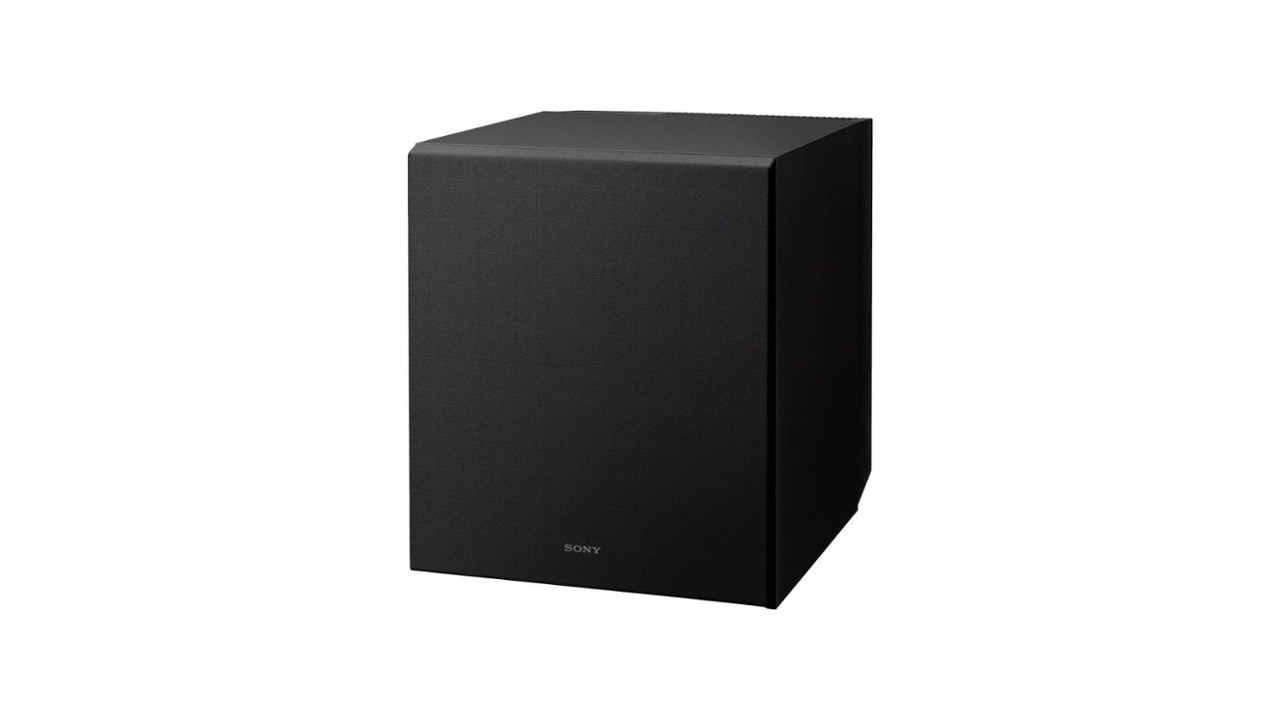
The Sony SA-CS9M2 is the easiest subwoofer recommendation to make while the 38%-off deal is live: proven 10-inch platform, tight low-vibration bass, and compact enough for real rooms. The thin review base and 10-inch output ceiling are the honest caveats. For first-time home theater builders, it's the upgrade that changes everything.
Final Verdict
So — is the Sony SA-CS9M2 worth it? At $203, yes, with genuine enthusiasm. You're getting a well-engineered 10-inch subwoofer from a platform with years of owner goodwill, at the lowest price it's ever sold for. The bass reflex design and vibration damping give it a tighter, more accurate character than most budget subs, and the compact cabinet fits where competitors won't.
It's not perfect: the 15-rating review base means you're buying partly on the platform's reputation, and a single 10-inch driver has honest limits in big rooms. But for small-to-medium rooms, first-time builders, and Sony CS-series owners, the combination of performance, simplicity, and that 38% discount is hard to argue with. Check that the deal price is still live — and if it is, this is the subwoofer to buy.
Affiliate Disclosure
This article may contain affiliate links. If you purchase a product through one of these links, we may earn a commission at no additional cost to you. Our recommendations are based on product research, specifications, features, value, and buyer usefulness — not on the commission we may receive.