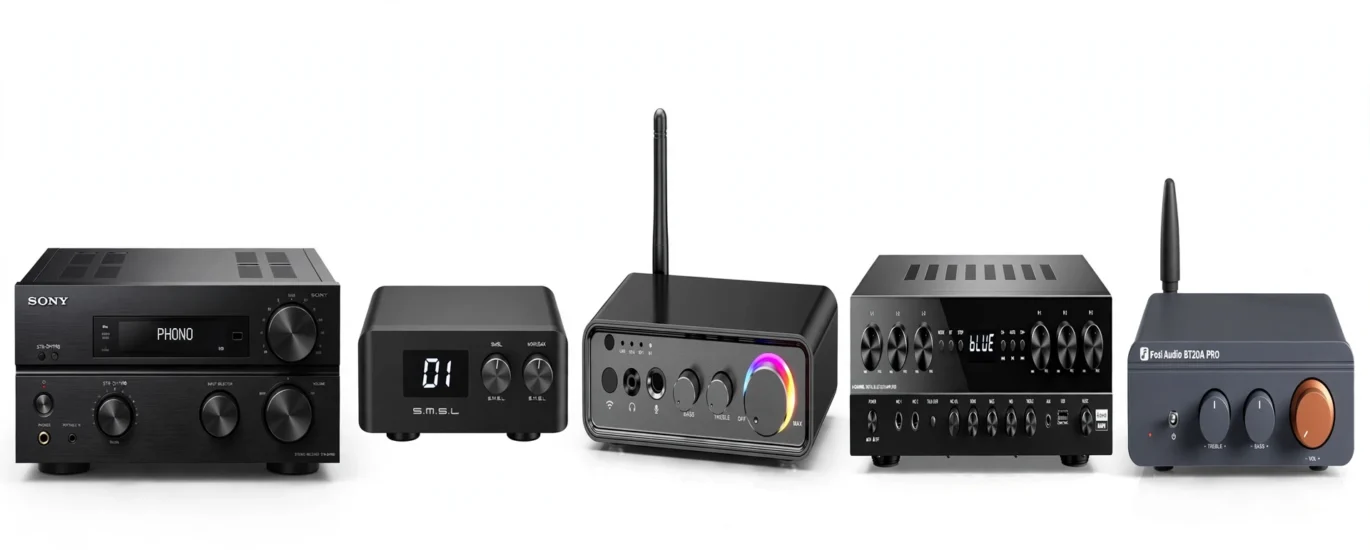
5 Best Bluetooth Amplifiers in 2026 — Which One Is Worth Buying?
Your speakers are only as good as what's driving them. Whether you're dusting off a turntable, building a desktop setup, or throwing karaoke nights, the right amplifier decides how your music actually sounds. We compared five very different options — from a classic Sony receiver to a $45 mini amp — on features, real-world usability, and value, so you can buy with confidence.
Sony STR-DH190 2-Channel Home Stereo Receiver
If you want the traditional hi-fi experience — vinyl included — this is the grown-up choice of the five.
Product Overview
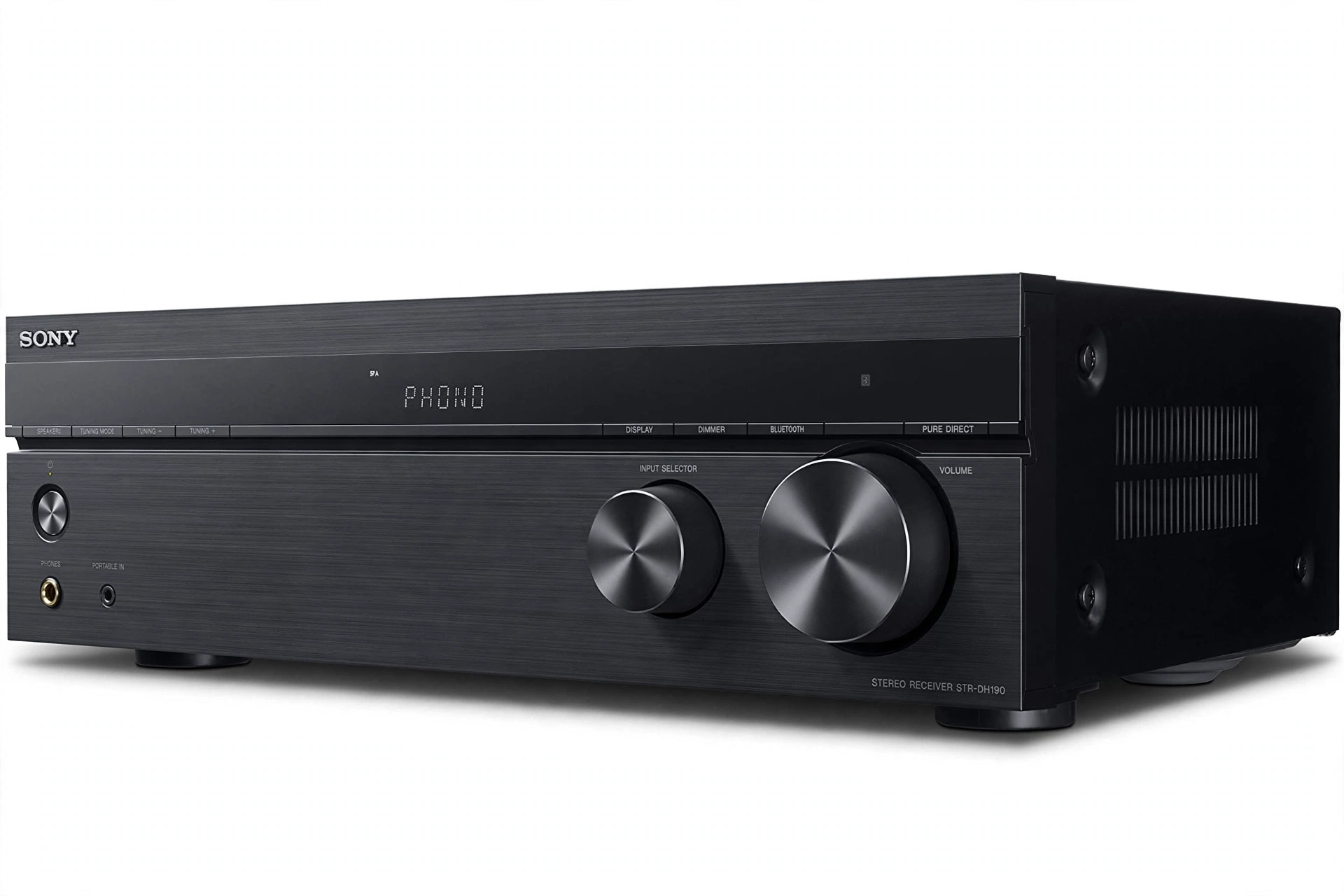
Sony's STR-DH190 is a classic two-channel stereo receiver — the kind of component that anchors a living-room system for a decade. Unlike the compact amplifiers on this list, it gives you a dedicated phono input for a turntable, four stereo RCA inputs for CD players and streamers, and a 3.5mm input for anything else. Its listed 100 watts per channel (8 ohms, 1kHz) is plenty for typical bookshelf or floor-standing speakers, and A/B switching lets you run speakers in two rooms or all four at once. Built-in Bluetooth covers wireless streaming from your phone. At a listed $218 with a 4.5/5 rating from over 10,000 reviews, it's the safe, proven pick — but it's also the biggest box here by far, and overkill if you just need to power a desktop pair.
Key Features
- Phono input for turntables — This is the standout. If your turntable lacks a built-in preamp, you need this stage to get proper volume and equalization from vinyl. None of the other four products offer it.
- A/B speaker switching — Run two pairs of speakers (up to four total) in separate zones or all at once. Genuinely useful for living room plus patio or bedroom setups.
- Bluetooth streaming built in — Pairs the old-school receiver experience with modern convenience: stream Spotify or podcasts straight from your phone with no extra dongle.
Specifications
| Brand | Sony |
|---|---|
| Model | STR-DH190 |
| Channels | 2 (stereo) |
| Power output | 100W x 2 (8 ohms, 1kHz, as listed) |
| Speaker impedance | 6–16 ohms |
| Inputs | Phono, 4x stereo RCA, 3.5mm |
| Outputs | Stereo RCA, speaker terminals (A/B) |
| Wireless | Bluetooth audio streaming |
| Listed price | $218.00 (list $249.99, -13%) |
How It Performs in Real-World Use
Based on the specifications, the STR-DH190 is built for the living room, not the desk. The feature set suggests effortless driving of typical 8-ohm bookshelf speakers to room-filling levels, with the phono stage making it the natural hub for a vinyl setup. For buyers who stream mostly, the Bluetooth input means your phone becomes just another source alongside the turntable and CD player. The main advantage here is completeness: one box handles switching, volume, and wireless without add-ons. Setup is traditional — speaker wire, RCA cables, done — but you'll want a proper AV cabinet shelf, since at 5.25 inches tall with ventilation needs, this isn't a hide-behind-the-monitor device.
Design & Build
A conventional low-profile AV component at 5.25 inches tall, designed to slide into a standard AV cabinet. The front panel carries the familiar Sony layout: large volume knob, input selector, and a clear display. It's not flashy, and that's the point — it looks like proper hi-fi furniture.
Ease of Use
Straightforward for anyone who's used a receiver before: connect speakers with bare wire or banana plugs, plug sources into labeled RCA inputs, pair Bluetooth like any speaker. The included remote covers the basics. No app, no network setup, no firmware — refreshingly simple.
Who Should Buy It?
- Vinyl listeners who need a real phono stage without buying a separate preamp
- Buyers building a traditional living-room stereo around passive speakers
- Anyone wanting multi-room audio via A/B speaker switching
- Shoppers who value a proven product with 10,000+ ratings behind it
Who Should Avoid It?
- Skip it if you need surround sound or HDMI — this is stereo-only
- It may not make sense if you only stream from a phone; a mini amp does that for less
- Desk setups: it's far too large for a computer workstation
Pros & Cons
Pros
- Dedicated phono input — the only one on this list with a real turntable stage
- A/B switching runs up to four speakers in two zones
- 100W x 2 (as listed) comfortably drives most passive bookshelf speakers
- Bluetooth streaming adds modern convenience to a classic design
- 4.5/5 from 10,109 reviews — the most proven track record here
Cons
- Stereo-only: no surround decoding and no HDMI inputs
- Bulky 5.25-inch chassis needs real cabinet space
- At $218 it's the priciest option on this list
- No USB DAC input for direct computer audio
- Bluetooth version isn't specified, so range and codec support are unknown
Value for Money
At a listed $218 (down from $249.99), you're paying for completeness: phono stage, four RCA inputs, A/B switching, and Bluetooth in one proven box. For a vinyl-based system, buying a mini amp plus a separate phono preamp would land you near the same total with more clutter. If you don't need the phono stage or the extra inputs, though, the cheaper options below deliver the core job — power plus Bluetooth — for half the price or less. Pricing can change, so check the latest retailer price before buying.
Overall
The STR-DH190's biggest strength is that it asks for no compromises from traditionalists: vinyl, multiple sources, two rooms, wireless streaming — all covered. Its biggest weakness is simply relevance: if your world is a phone and a pair of speakers, much of this box goes unused. Ideal buyer: the vinyl listener building a proper living-room system. It earns the Best Premium Pick label honestly.
Listed at $218.00 at the time of research. Pricing can change, so check the latest retailer price before buying.
SMSL D1 Hi-Res Audio DAC
An honest clarification first: this isn't an amplifier at all — it's the digital-to-analog converter your system might be missing.
Product Overview
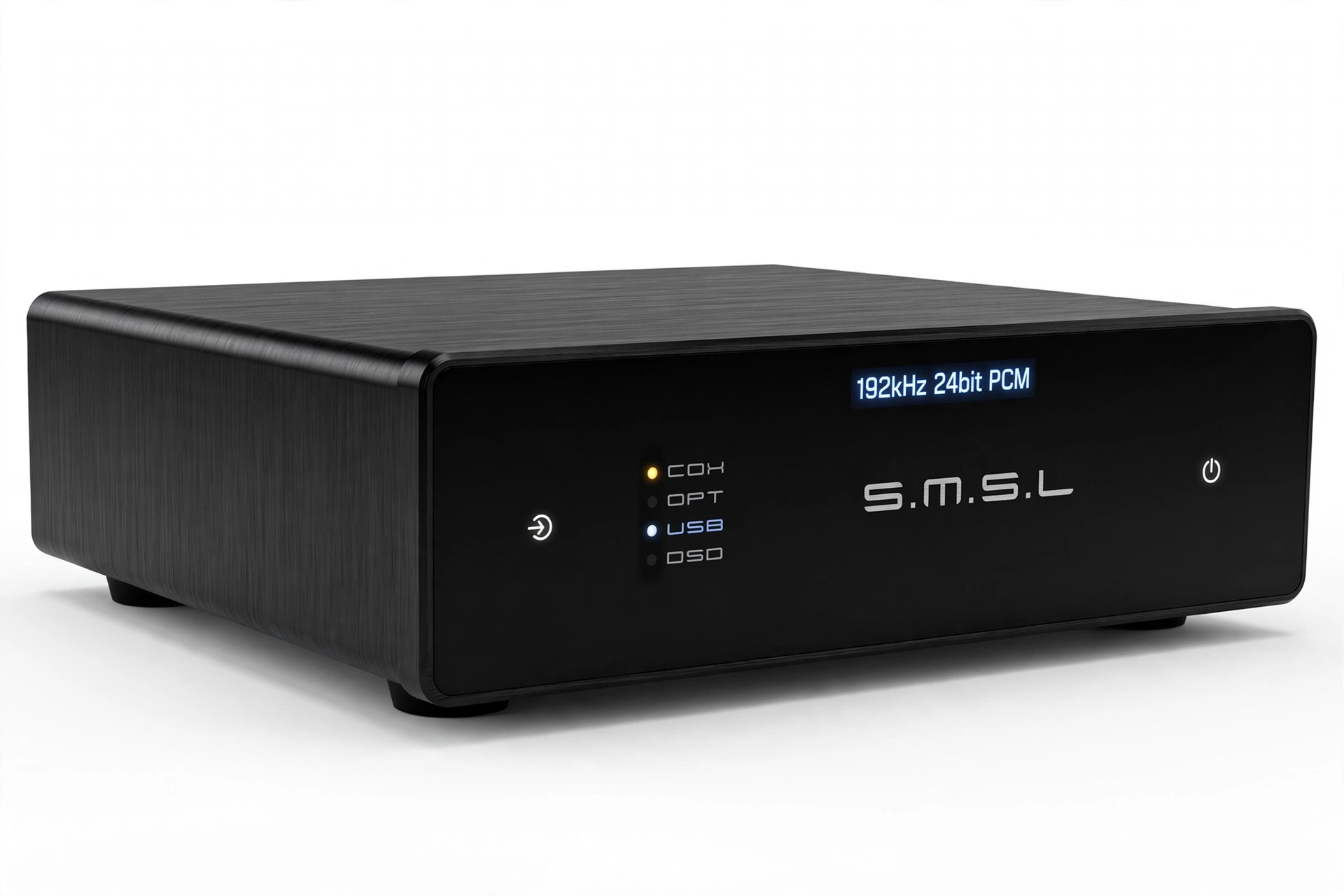
The SMSL D1 earns its place here as the problem-solver for digital listeners. Most computers and phones have merely adequate built-in audio conversion; a dedicated DAC like the D1, built around the ROHM BD34352EKV decoding chip with listed 768kHz/32-bit support, is designed to extract noticeably cleaner analog sound from USB, optical, or coaxial sources. Its RCA output feeds any amplifier or pair of powered speakers. The full-aluminum shell keeps the footprint tiny enough for a desk corner, and touch-sensitive buttons handle input switching. At a listed $84.99, it's an affordable upgrade — but buyers must understand what they're getting: better signal quality, not more volume. Pair it with one of the amplifiers on this list and each does what it does best.
Key Features
- ROHM BD34352EKV decoding chip — The heart of the unit. A quality DAC chip is what separates clean, detailed conversion from the noisy output of a laptop headphone jack — this is the entire reason the product exists.
- USB, optical, and coaxial inputs — Covers practically every digital source: computers, TVs, CD transports, and streamers. You choose the cleanest output your source offers.
- Compact aluminum construction — Small enough to disappear on a desk, and the metal shell helps with durability and shielding compared with plastic alternatives.
Specifications
| Brand | SMSL |
|---|---|
| Model | D1 |
| Type | Digital-to-analog converter (DAC) — not an amplifier |
| DAC chip | ROHM BD34352EKV (as listed) |
| Decoding | Up to 768kHz/32-bit (as listed) |
| Inputs | USB, Optical, Coaxial |
| Output | RCA (analog line-out) |
| Controls | Touch-sensitive buttons |
| Listed price | $84.99 |
How It Performs in Real-World Use
Based on the specifications, the D1's contribution is clarity rather than loudness. For buyers who listen to lossless files or streaming services through a computer, the feature set suggests a meaningful step up from onboard audio — tighter bass definition, cleaner highs — once fed into a decent amp or powered speakers. The main advantage here is focus: it does one job. But that single-mindedness is also the limitation: connect it directly to passive speakers and you'll hear nothing, because there's no amplification stage. Think of it as an ingredient, not a meal.
Design & Build
A minimalist black aluminum box with a small display and touch controls — no knobs, no clutter. The compact size suits desktop audio chains, and the metal enclosure feels more premium than the price suggests.
Ease of Use
Connect your source via USB, optical, or coaxial; connect RCA out to your amp or powered speakers; select input with the touch buttons. No drivers are mentioned for basic operation, and there's nothing to configure beyond input selection.
Who Should Buy It?
- Desktop listeners whose computer audio sounds harsh or flat
- Buyers who already own an amplifier or powered speakers and want cleaner source quality
- Streamers wanting optical/coaxial input from a TV or CD transport
- Anyone building a separates chain on a budget
Who Should Avoid It?
- Skip it if you need to drive passive speakers — it has no amplifier inside
- It may not make sense if your sources are all analog (turntable, tape)
- Consider another model if you want Bluetooth; the D1 has no wireless input
- Budget buyers may prefer putting the $84.99 toward a better amplifier first
Pros & Cons
Pros
- ROHM DAC chip with listed 768kHz/32-bit decoding — serious conversion for the price
- Three digital inputs cover USB, optical, and coaxial sources
- Compact aluminum build fits any desktop chain
- Touch controls keep the front panel clean and simple
- $84.99 is an affordable entry into dedicated conversion
Cons
- Not an amplifier — cannot drive passive speakers alone
- No Bluetooth or wireless input of any kind
- Only 192 ratings at 4.2/5 — the least-reviewed product here
- Single RCA output means no balanced connection option
- Adds a box and cables rather than simplifying your setup
Value for Money
At a listed $84.99, the D1 is fairly priced for a dedicated DAC with this chip and input set — comparable units often cost more. The value equation depends entirely on your chain: if your bottleneck is a noisy laptop output feeding good speakers, this is money well spent. If your speakers or amplifier are the weak link, fix those first. Pricing can change, so check the latest retailer price before buying.
Overall
The D1's biggest strength is doing one thing well: clean digital-to-analog conversion from nearly any digital source. Its biggest weakness is that it's half a solution — you still need amplification. Ideal buyer: the desktop listener with powered speakers or a separate amp and a noisy computer output. It earns its ranking as the specialist pick, not the all-rounder.
Listed at $84.99 at the time of research. Pricing can change, so check the latest retailer price before buying.
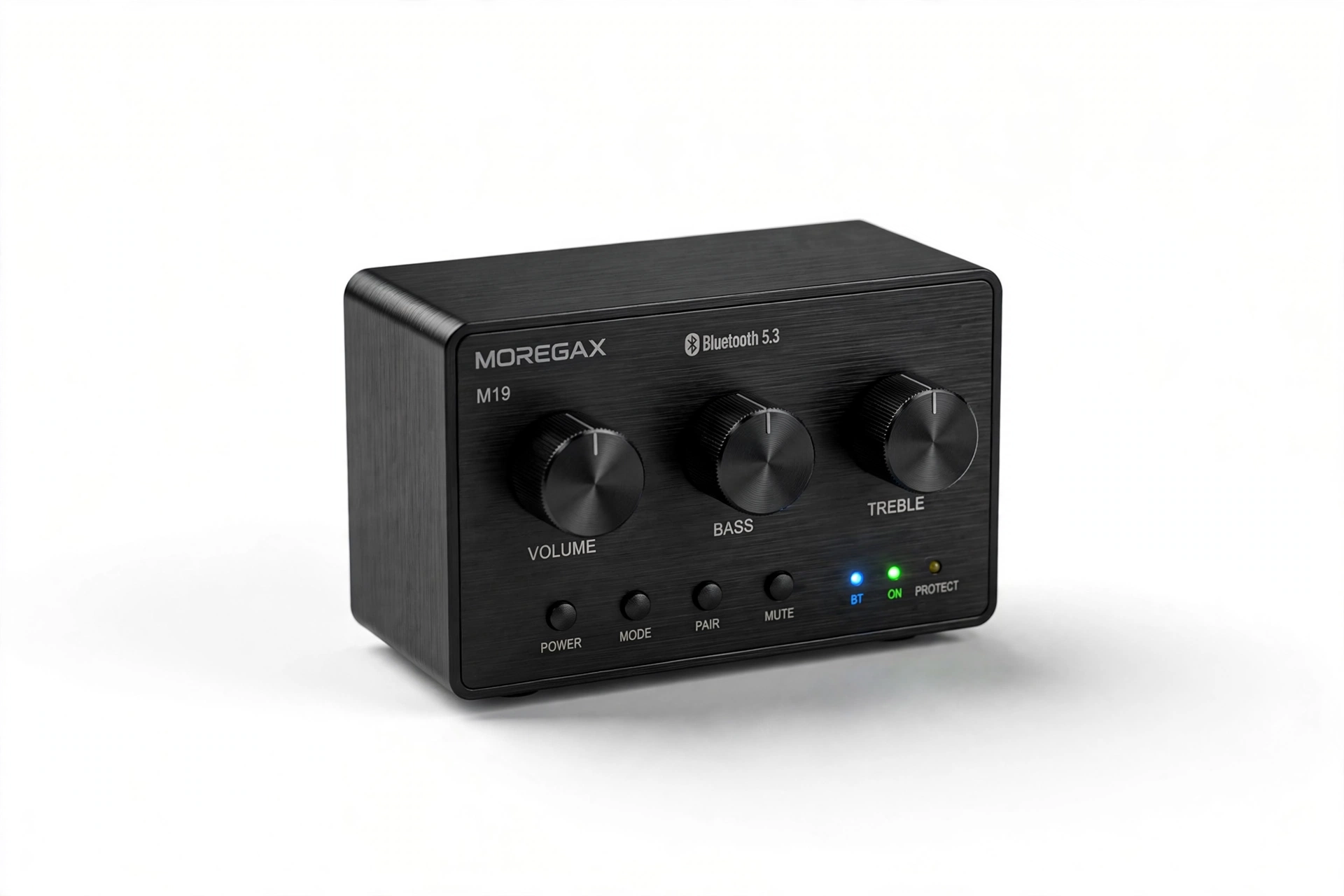
MOREGAX M19 Bluetooth Mini Amplifier
Forty-five dollars for Bluetooth 5.3, a pile of inputs, and a listed 100W x 2 — the price is the headline, but the inputs are the story.
Product Overview
The MOREGAX M19 is a compact Class D mini amplifier built around dual TPA3116D2 chips, listed at 100W x 2. What makes it interesting at $44.99 isn't just the price — it's the input selection. Bluetooth 5.3 with a listed 65-foot open-air range handles wireless, while RCA, optical, coaxial, and even a microphone input cover wired sources most budget amps ignore. A 3.5mm headphone output and 6.5mm mic jack round out a genuinely flexible little box, and bass/treble knobs let you tune the sound without an app. The honest caveat: with a 4.4/5 rating from just 56 reviews, long-term reliability is unproven, and budget Class D amps rarely deliver their headline wattage into real-world speakers. Treat the 100W figure as a listed maximum, not a promise.
Key Features
- Bluetooth 5.3 with long range — Newer Bluetooth means a more stable connection and better efficiency than the 5.0 found on pricier rivals here; the listed 65-foot open-air range suits patio or garage setups.
- Unusually complete inputs — RCA, optical, coaxial, plus a microphone input — at this price, that mic jack is rare and opens up simple PA or karaoke-lite use.
- Bass and treble controls — Physical tone knobs matter more than they sound: they let you compensate for bright or boomy speakers instantly, no menu diving.
Specifications
| Brand | MOREGAX |
|---|---|
| Model | M19 |
| Power output | 100W x 2 (as listed) |
| Amplifier | Class D, dual TPA3116D2 chips (as listed) |
| Bluetooth | 5.3, up to ~65 ft open line of sight (as listed) |
| Inputs | RCA, Optical, Coaxial, Microphone |
| Outputs | Passive speaker terminals, 3.5mm AUX headphone, 6.5mm mic jack |
| Controls | Bass and treble knobs |
| Listed price | $44.99 |
How It Performs in Real-World Use
Based on the specifications, the M19 is best understood as a "good enough and then some" box for secondary systems: garage workshops, patio speakers, dorm rooms, or a first stereo for a teenager. The feature set suggests easy pairing and enough drive for efficient bookshelf speakers at moderate volumes. The main advantage here is flexibility per dollar — few $45 amps offer optical input, let alone a mic jack. For buyers who push volume hard with demanding speakers, though, expect the limits of budget Class D to show: keep expectations realistic and it will pleasantly surprise you.
Design & Build
A small black metal chassis that disappears on a shelf. The front panel is sensibly laid out with knobs for volume and tone. Nothing about it screams premium, but nothing about it looks cheap enough to embarrass a bookshelf either.
Ease of Use
Wire your speakers, pick an input, pair Bluetooth like any speaker, turn the knobs. There's no app, no display to learn, and no network setup — about as close to plug-and-play as amplifiers get.
Who Should Buy It?
- Budget buyers who need the cheapest credible way to power passive speakers
- Garage, patio, or workshop systems where size and price matter more than prestige
- Anyone who wants optical input from a TV without spending $100+
- Casual users who'd like a mic input for announcements or light karaoke
Who Should Avoid It?
- Skip it if you want a proven reliability record — 56 reviews is a thin history
- It may not make sense for demanding speakers or large rooms at high volume
- Consider another model if you need a phono stage or USB DAC input
- Audiophiles chasing the last 5% of sound quality should look upmarket
Pros & Cons
Pros
- $44.99 — the lowest price on this list by a wide margin
- Bluetooth 5.3 is the newest wireless version here, with generous listed range
- RCA, optical, coaxial, and mic inputs — rare breadth at this price
- Physical bass/treble knobs for instant tone shaping
- Compact enough for anywhere: desk, shelf, or garage wall
Cons
- Only 56 reviews — long-term reliability is unproven
- Listed 100W x 2 is a maximum figure; real-world output will be lower
- No phono input and no USB input for computers
- Basic build and likely basic included power supply
- 4.4/5 rating rests on a small sample that could shift
Value for Money
This is the value story of the list in pure dollars: $44.99 buys Bluetooth 5.3, four input types, and tone controls. Nothing else here touches that price. The value holds as long as your expectations do — secondary rooms, efficient speakers, moderate volumes. If this is your main living-room system and you can stretch to $99.99, the Fosi below buys substantially more proven performance. Pricing can change, so check the latest retailer price before buying.
Overall
The M19's biggest strength is its price-to-features ratio — nothing this cheap should have this many inputs. Its biggest weakness is the thin track record behind those specifications. Ideal buyer: anyone needing a capable little amp for a secondary space without overthinking it. It earns Best Budget without apology.
Listed at $44.99 at the time of research. Pricing can change, so check the latest retailer price before buying.
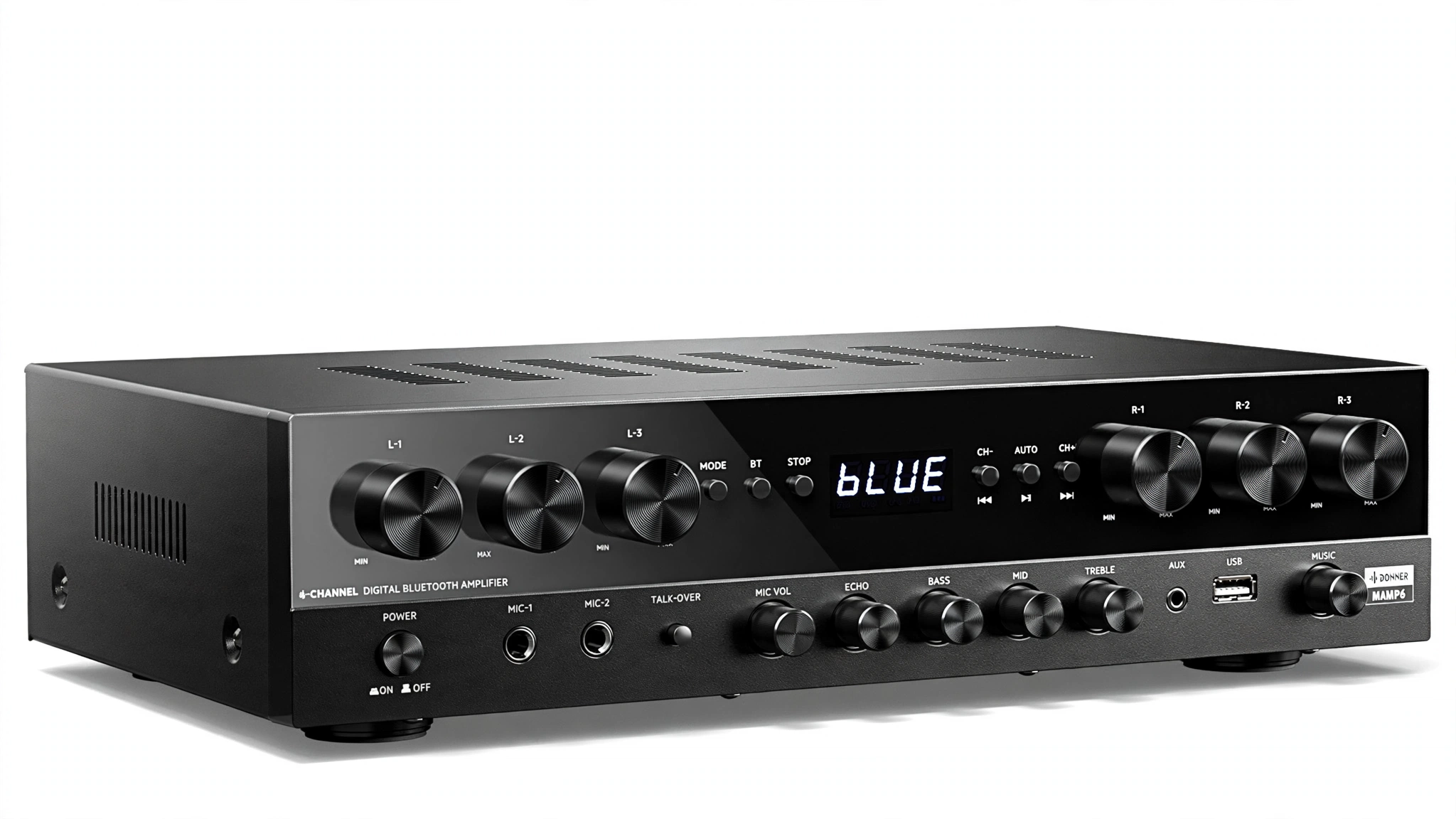
Donner MAMP6 6-Channel Karaoke Receiver
Six channels, two microphones, and echo on tap — if your idea of a good evening involves a mic stand, nothing else here competes.
Product Overview
Donner's MAMP6 takes a completely different brief from everything else on this list. Where the others chase the perfect stereo image, the MAMP6 chases the perfect party: six channels that can be controlled independently, supporting up to six groups of twelve speakers at 4–16 ohms — enough to wire a house, a small venue, or a very enthusiastic basement. Two microphone inputs with echo, a remote covering treble, midrange, bass, echo, and talkover, plus Bluetooth 5.3, USB, and FM round out an entertainment-first feature set. The listed $122.99 (down from $149.99) and 3.9/5 from 416 reviews reflect its niche honestly: buyers who want karaoke love the flexibility, while pure music listeners will find the other picks more refined. Just remember the golden rule of this product: peak watts are marketing, RMS watts are engineering.
Key Features
- 6 channels, up to 12 speakers — Independent channel control means different volumes in different rooms or zones. For multi-room background music or a party spread across spaces, this is genuinely useful.
- Dual mic inputs with echo — The karaoke core. Two microphones, echo effect, and talkover (music ducks under the mic) on the remote — the only product here that does any of this.
- Full-function remote — Treble, midrange, bass, echo, and talkover adjustable from the couch. In a party setting, not having to walk to the rack matters.
Specifications
| Brand | Donner |
|---|---|
| Model | MAMP6 |
| Power output | 1000W peak / 25W x 6 RMS (as listed — RMS is the meaningful figure) |
| Channels | 6, independently controlled; up to 12 speakers |
| Speaker impedance | 4–16 ohms |
| Bluetooth | 5.3 |
| Inputs | USB, FM, 2x microphone, RCA, Optical, Coaxial |
| Effects | Echo, talkover (via remote) |
| Listed price | $122.99 (list $149.99, -18%) |
How It Performs in Real-World Use
Based on the specifications, the MAMP6 is designed for social listening, not critical listening. The feature set suggests it excels at background music across multiple rooms and karaoke nights where microphone handling and echo matter more than audiophile refinement. For buyers who host, the main advantage here is coverage: one box feeding speakers in the living room, kitchen, and patio, with mics ready. The 3.9/5 rating hints at the compromise — this is a fun-first product, and buyers expecting the sonic polish of the Sony or Fosi may find it rougher around the edges.
Design & Build
A straightforward black rack-style chassis with a no-nonsense front panel: mic jacks up front, channel controls, and a display. It's built to be used, not admired — the aesthetic is function over furniture.
Ease of Use
Wire speakers to the labeled channel terminals, plug in mics, pair Bluetooth or select USB/FM, and drive everything from the remote. Independent channel control takes a few minutes to learn, but the remote's dedicated tone and echo buttons keep party-time adjustments simple.
Who Should Buy It?
- Karaoke hosts who need mic inputs and echo in one box
- Party planners wanting music across multiple rooms or zones
- Small venues, classrooms, or community spaces needing many speakers cheaply
- Buyers who value channel flexibility over audiophile refinement
Who Should Avoid It?
- Skip it if you want a pure music-first stereo — the Sony or Fosi serve that better
- It may not make sense if you'll never use a microphone; you're paying for unused features
- Consider another model if you need a phono input or USB DAC functionality
- Buyers wanting a compact desktop unit — this is a full-size component
Pros & Cons
Pros
- 6 independently controlled channels — unique multi-zone flexibility here
- Dual mic inputs with echo and talkover, purpose-built for karaoke
- Bluetooth 5.3 plus USB and FM cover nearly every casual source
- Full remote with treble/mid/bass/echo controls for couch operation
- $122.99 for six channels is strong per-channel value
Cons
- 1000W is peak power; real continuous output is 25W x 6 RMS — know the difference
- 3.9/5 rating is the lowest on this list, suggesting mixed experiences
- Music-first buyers will find it less refined than the stereo-focused picks
- No phono input, no USB DAC input for computers
- Remote battery not included — a small but telling cost-cut
Value for Money
At a listed $122.99, you're buying channels and microphones, not watts-per-dollar of hi-fi. Nothing else here touches six channels or karaoke features at any price, so if that's your use case, the value is obvious. If it isn't — if you just want great stereo sound — the Fosi at $99.99 gives you a better listening experience for less. Pricing can change, so check the latest retailer price before buying.
Overall
The MAMP6's biggest strength is its party-first versatility: zones, mics, echo, remote — a complete entertainment toolkit. Its biggest weakness is that music purists will hear the compromise. Ideal buyer: the karaoke host or multi-room entertainer. It earns its #2 spot as the specialist that owns its niche completely.
Listed at $122.99 at the time of research. Pricing can change, so check the latest retailer price before buying.
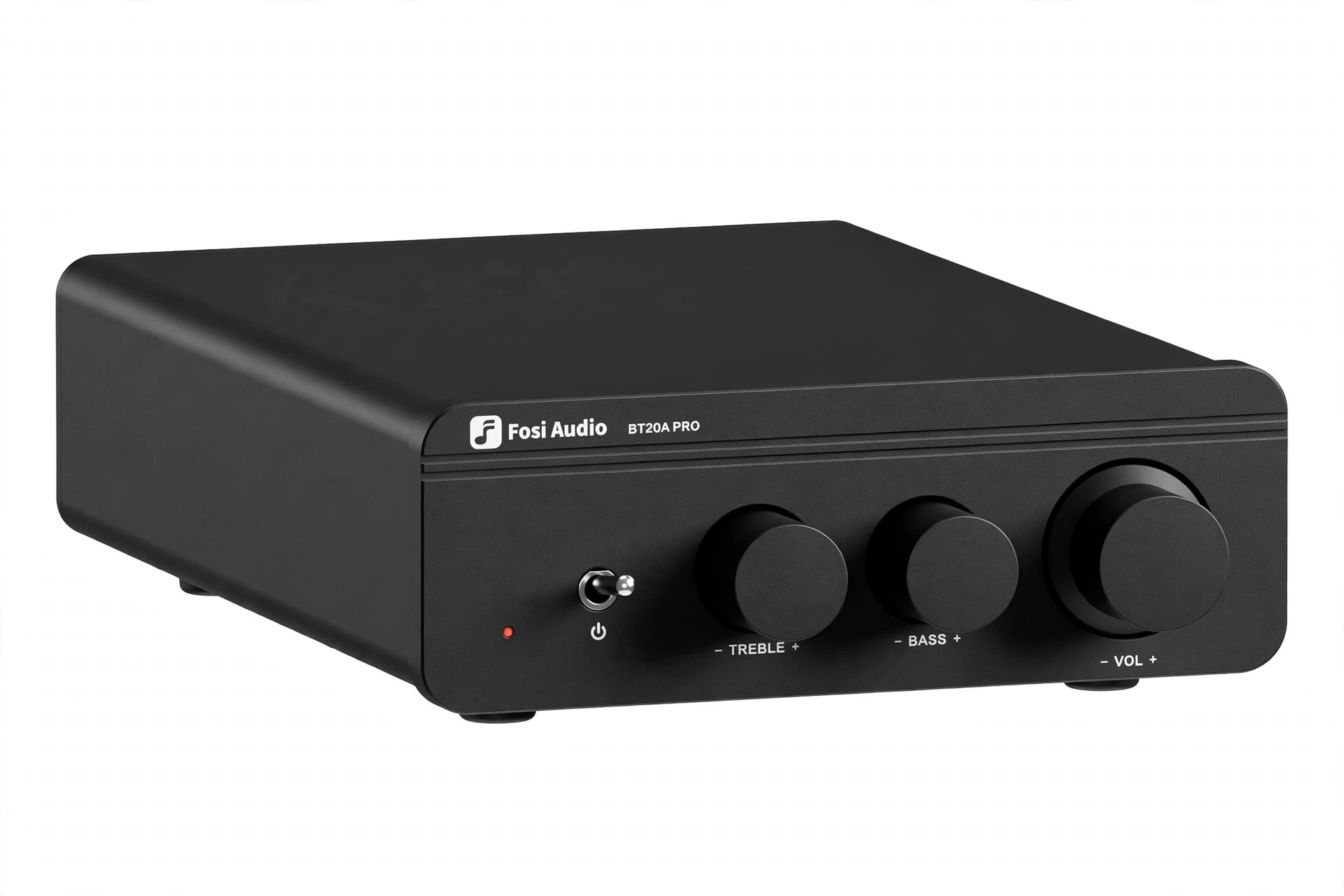
Fosi Audio BT20A Pro Bluetooth 5.0 Amplifier
The people's champion: Amazon's Choice, 3,027 reviews deep, and the most amplifier per dollar on this list.
Product Overview
Fosi Audio built its reputation on exactly this kind of product: a compact Class D amplifier that over-delivers for the money. The BT20A Pro centers on TI's TPA3255 chip, with a manufacturer-listed 300W x 2 capability, Bluetooth 5.0 with memory pairing, and proper bass and treble knobs for hands-on tone shaping. What lifts it above typical mini amps is the enthusiast touch: two plug-in NE5532 op-amps that can be swapped for alternatives like the OPA2134 or MUSES02 to tune the sound character, plus listed specs of ≥108dB SNR and ≤0.005% THD. With a 4.5/5 rating from 3,027 reviews and Amazon's Choice status, it's the most buyer-validated product here. At a listed $99.99, it lands in the sweet spot: serious enough for real bookshelf speakers, cheap enough to be an easy decision. Just keep the wattage claim in perspective — it's chip capability, not a measured continuous rating.
Key Features
- TPA3255 chip with listed 300W x 2 capability — On paper, the most powerful stereo stage here. In practice, treat it as generous headroom for bookshelf speakers rather than a laboratory-verified figure.
- Swappable op-amps — The two socketed NE5532 chips can be exchanged for boutique alternatives. Most buyers will never touch them, but for hobbyists it's a genuine upgrade path no rival offers.
- Bass and treble controls with Bluetooth 5.0 — Physical tone knobs plus wireless streaming with pairing memory: the everyday usability combo that makes this easy to live with.
Specifications
| Brand | Fosi Audio |
|---|---|
| Model | BT20A Pro |
| Power output | 300W x 2 (TPA3255 chip capability, manufacturer-listed — not verified RMS) |
| Amplifier | Class D, TI TPA3255 |
| Bluetooth | 5.0, with pairing memory |
| Controls | Volume, bass, treble knobs |
| Op-amps | 2x socketed NE5532, replaceable (as listed) |
| Listed specs | SNR ≥108dB, THD ≤0.005% (manufacturer-listed) |
| Listed price | $99.99 (list $109.99, -9%) — Amazon's Choice |
How It Performs in Real-World Use
Based on the specifications and its large review base, the BT20A Pro is the safest recommendation for the most common job: driving a pair of passive bookshelf speakers in a bedroom, office, or living room. The feature set suggests ample clean headroom for typical 6–8 ohm speakers at normal listening levels, with the tone knobs handling room quirks. For buyers who stream from a phone, Bluetooth 5.0 with pairing memory means it reconnects without fuss. The main advantage here is balance — power, features, size, and price all land in the right place at once. It won't replace a full receiver for vinyl or multi-room, but for pure amplified stereo, it's the sweet spot.
Design & Build
The classic Fosi compact aluminum chassis: small enough for a desk, clean enough for a shelf. Three knobs (volume, bass, treble) and a power switch keep the front panel honest and tactile. Low idle power draw (under 2.5W as listed) means it sips electricity when idle.
Ease of Use
Connect speakers, pair Bluetooth once (it remembers), turn the knobs. Holding the volume knob for five seconds clears pairings if you ever need to. There's no app and no display to manage — it behaves like the simple, reliable box it is.
Who Should Buy It?
- Buyers powering passive bookshelf speakers in a bedroom, office, or living room
- Anyone wanting the best-reviewed option here (3,027 ratings at 4.5/5)
- Budget-conscious shoppers who still want real power and tone controls
- Hobbyists who like the idea of op-amp rolling down the road
- Gift buyers — Amazon's Choice status makes it an easy, safe recommendation
Who Should Avoid It?
- Skip it if you need a phono stage — only the Sony has one
- It may not make sense for karaoke or multi-zone; that's the Donner's job
- Consider another model if you need USB/optical DAC input for a computer
- Buyers with very demanding speakers should verify compatibility carefully
Pros & Cons
Pros
- Listed 300W x 2 chip capability — the strongest stereo figure on this list
- Amazon's Choice with 4.5/5 from 3,027 reviews — the most validated pick here
- Swappable op-amps give enthusiasts a real upgrade path
- Bass/treble knobs plus Bluetooth 5.0 with pairing memory
- $99.99 hits the sweet spot between performance and price
Cons
- 300W x 2 is manufacturer-listed chip capability, not a verified RMS rating
- Bluetooth 5.0 lags the 5.3 on the MOREGAX and Donner
- No phono input, no optical/coaxial digital inputs
- Compact size means real-world sustained output is below the headline figure
- Op-amp rolling is niche — most buyers will never use it
Value for Money
At a listed $99.99 (down from $109.99), the BT20A Pro is the value anchor of this entire comparison: more listed power than anything near it, tone controls, Bluetooth, and a 3,000+ review track record. The MOREGAX is cheaper, but the Fosi buys you proven reliability and meaningfully more capability for $55 more. The Sony costs twice as much for a different (not necessarily better-sounding) job. For pure amplified stereo per dollar, this is the one. Pricing can change, so check the latest retailer price before buying.
Overall
The BT20A Pro's biggest strength is that it gets everything right for the mainstream buyer: power, features, size, price, and a review history that backs it up. Its biggest weakness is the wattage asterisk — the headline figure needs the "chip capability" qualifier. Ideal buyer: anyone driving passive speakers who wants the safe, popular, great-value choice. It earns #1 and Best Value honestly.
Listed at $99.99 at the time of research. Pricing can change, so check the latest retailer price before buying.
Product Comparison
| Product | Best For | Key Feature | Main Advantage | Main Limitation |
|---|---|---|---|---|
| #5 Sony STR-DH190 $218.00 | Traditional hi-fi, vinyl | Phono input + A/B speakers | Complete full-size receiver, proven | Bulky; stereo-only, no HDMI |
| #4 SMSL D1 $84.99 | Digital sources | ROHM DAC, 768kHz/32-bit | Clean conversion in a tiny box | Not an amplifier — needs one |
| #3 MOREGAX M19 $44.99 | Tight budgets | BT 5.3, 100W x 2 listed | Cheapest credible option | Thin 56-review track record |
| #2 Donner MAMP6 $122.99 | Karaoke & parties | 6 channels, 2 mic inputs | Multi-zone + mics in one box | Peak/RMS gap; 3.9/5 rating |
| #1 Fosi BT20A Pro $99.99 | Most buyers | 300W x 2 listed, tone knobs | Best balance, 3,027 reviews | Wattage is chip capability, not RMS |
Which One Should You Choose?
| Buyer Type | Recommended Product | Why |
|---|---|---|
| Best Overall | Fosi Audio BT20A Pro | Power, features, price, and 3,000+ reviews in one $99.99 box |
| Best Value | MOREGAX M19 | $44.99 with Bluetooth 5.3 and four input types |
| Premium Buyer | Sony STR-DH190 | Full-size receiver with phono stage and 10,000+ reviews |
| Budget Buyer | MOREGAX M19 | The cheapest way to credibly power passive speakers |
| Vinyl Listener | Sony STR-DH190 | The only phono input on this list |
| Karaoke / Parties | Donner MAMP6 | Dual mics, echo, and six channels |
| Digital-Only Setup | SMSL D1 + an amp | Clean conversion feeding the Fosi or Sony |
| Desktop Audio | Fosi Audio BT20A Pro | Compact, simple, plenty for near-field speakers |
Price & Value
Best value: The MOREGAX M19 at $44.99 — nothing else powers passive speakers with Bluetooth 5.3 anywhere near this price. Worth paying extra for: the Fosi BT20A Pro at $99.99, which roughly doubles your money into triple the buyer validation and a meaningfully more capable amp. Better budget choice: there isn't one below the M19 on this list. Premium choice: the Sony STR-DH190 at $218 — you're paying for the phono stage, A/B switching, and a decade-proven platform. Best value when discounted: watch the Sony and Donner, both currently listed below their list prices (-13% and -18% respectively); either becomes notably more attractive on a deeper sale. Remember: listed prices move frequently, so check the latest retailer price before buying.
Buying Guide: 8 Things to Check Before Buying a Bluetooth Amplifier
1. RMS vs. peak power. Peak figures (like the Donner's 1000W) describe momentary bursts; RMS describes sustainable output. Compare RMS to RMS, and be skeptical of any wattage without a stated test condition.
2. Match power to your speakers. Check your speakers' impedance (4, 6, or 8 ohms) and power handling. An amp rated for 6–16 ohms driving 4-ohm speakers can struggle — verify compatibility in the listing.
3. Bluetooth version and range. Newer versions (5.3 vs 5.0) generally mean more stable connections and better efficiency. If the amp sits far from your couch, range specs matter.
4. Inputs must match your sources. Turntable? You need a phono input (only the Sony here). TV? Optical is ideal. Computer? USB or a separate DAC. Count your sources before you buy.
5. DAC vs. amplifier — know which you need. A DAC (like the SMSL D1) improves digital sound but can't drive speakers. An amplifier drives speakers. Many buyers need one; some benefit from both.
6. Tone controls and remote. Physical bass/treble knobs solve room problems in seconds. If the amp will live across the room, a real remote (like the Donner's) beats walking over every time.
7. Room size and use case. A bedroom desk needs far less power than a party basement. Buy for the room you have, not the specifications you admire.
8. Review depth. A 4.5/5 from 3,000+ reviews (Fosi) means something different from 4.4/5 from 56 (MOREGAX). Treat thin review histories as higher risk, whatever the score.
Best Alternatives
If you need surround sound or HDMI: none of these five do home theater surround — you'd want a dedicated AV receiver category instead, which is a different product class entirely and outside this comparison.
If you only stream and own powered speakers: skip amplifiers altogether — the SMSL D1 alone, feeding your powered speakers, may be all the upgrade you need.
If $44.99 still feels like a lot for a secondary room: consider whether a simple Bluetooth speaker would serve a garage or workshop better than wiring passive speakers at all.
Frequently Asked Questions
Which Bluetooth amplifier is the best overall in 2026?
For most buyers, the Fosi Audio BT20A Pro. It combines a listed 300W x 2 chip capability, Bluetooth 5.0, bass and treble controls, and a 4.5/5 rating from over 3,000 reviews at a listed $99.99. If you specifically want a traditional full-size receiver with a phono stage, the Sony STR-DH190 is the premium alternative.
Is the Fosi BT20A Pro worth buying?
Based on its listed specifications and large review base, yes for the mainstream use case of driving passive bookshelf speakers. Just keep the 300W x 2 figure in context: it's a manufacturer-listed chip capability, not a verified continuous RMS rating.
What is the difference between a Bluetooth amplifier and a stereo receiver?
A Bluetooth amplifier is typically a compact power amp that drives passive speakers and adds wireless streaming. A stereo receiver like the Sony STR-DH190 is a larger component combining amplification with source switching and often a phono stage for turntables.
Is the SMSL D1 an amplifier?
No. The SMSL D1 is a digital-to-analog converter (DAC). It converts USB, optical, or coaxial digital audio into analog RCA output, but it cannot drive passive speakers on its own — it must feed an amplifier or powered speakers.
What does 1000W peak vs 25W x 6 RMS mean on the Donner MAMP6?
Peak power is the maximum short burst the output stage can momentarily handle; RMS is the continuous power it can sustain. The Donner MAMP6 lists 1000W peak but 25W x 6 RMS — the RMS figure is the meaningful number when matching speakers.
Which of these is best for karaoke?
The Donner MAMP6, without competition: two microphone inputs, echo and talkover effects, six channels for up to 12 speakers, and a full-function remote. None of the other four products include microphone inputs.
Do I need a phono input on my amplifier?
Only if you play vinyl on a turntable without a built-in preamp. Of these five, only the Sony STR-DH190 includes a dedicated phono input. The mini amplifiers and the DAC do not.
What should I check before buying a Bluetooth amplifier?
Your speakers' impedance and power handling, inputs matching your sources (RCA, optical, USB, phono), the Bluetooth version and range you need, whether you need a DAC or a true amplifier, and your room size. Pricing can change, so check the latest retailer price before buying.
Final Verdict
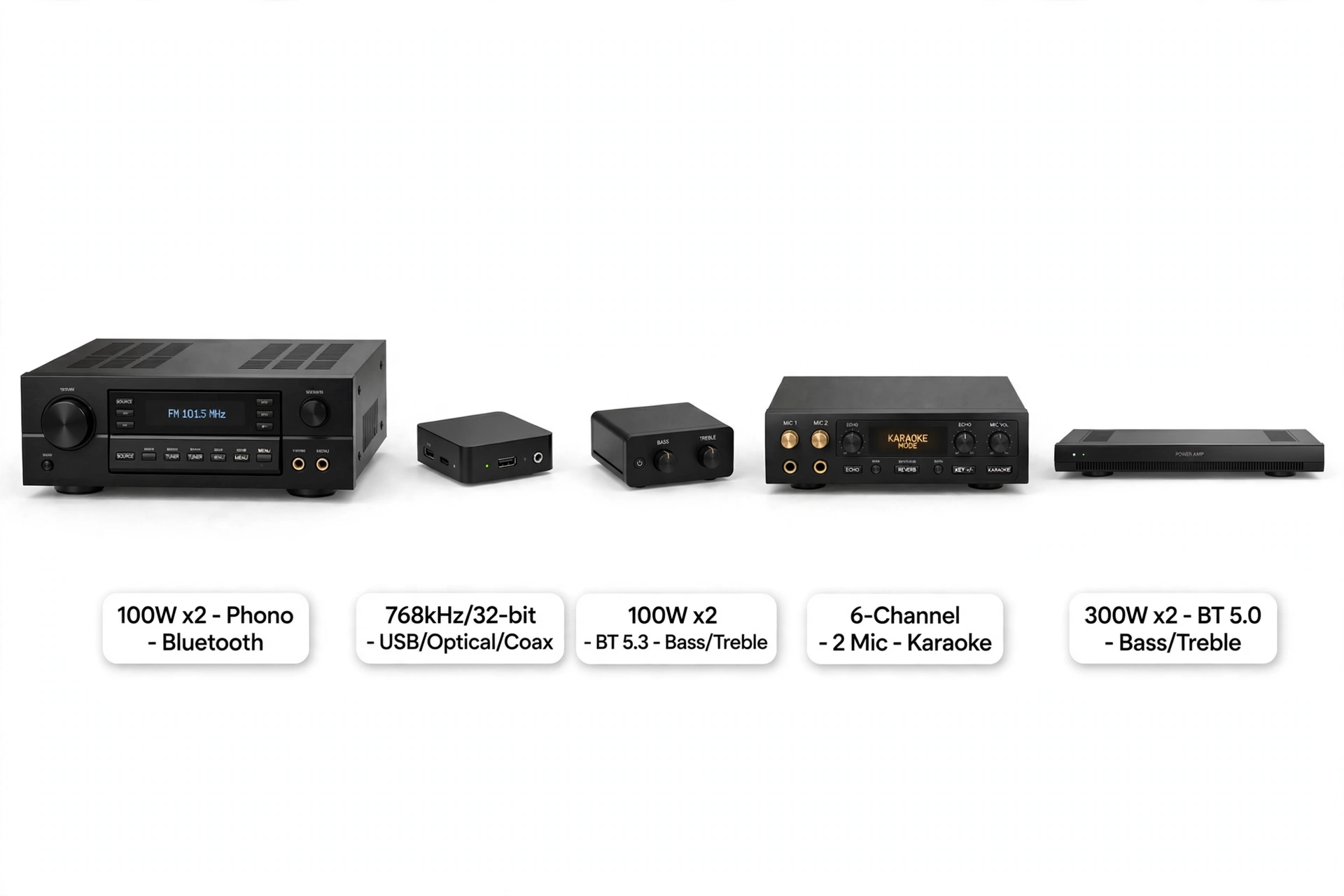
If I were helping a friend choose one of these today, I'd start with a single question: what are you plugging in? Phone and a pair of speakers? Get the Fosi BT20A Pro and don't look back — it's the #1 pick for a reason. Vinyl and a living room? The Sony STR-DH190 is the honest answer. Microphones and a party? The Donner MAMP6, obviously. A tight budget for the garage? The MOREGAX M19 will surprise you. And if your computer audio sounds flat through good speakers, the SMSL D1 fixes the actual problem. Match the product to the job, check the latest price before you buy, and you'll end up with the right box.
Final Buyer Summary
| Buyer Type | Recommended Product | Why |
|---|---|---|
| Most buyers | Fosi Audio BT20A Pro | Best all-round package at $99.99 |
| Vinyl listeners | Sony STR-DH190 | Only phono stage on the list |
| Smallest budget | MOREGAX M19 | $44.99 with BT 5.3 |
| Karaoke & parties | Donner MAMP6 | Mics, echo, 6 channels |
| Digital sources | SMSL D1 | Clean DAC conversion |
Affiliate Disclosure
"This article may contain affiliate links. If you purchase a product through one of these links, we may earn a commission at no additional cost to you. Our recommendations are based on product research, specifications, features, value, and buyer usefulness—not on the commission we may receive."